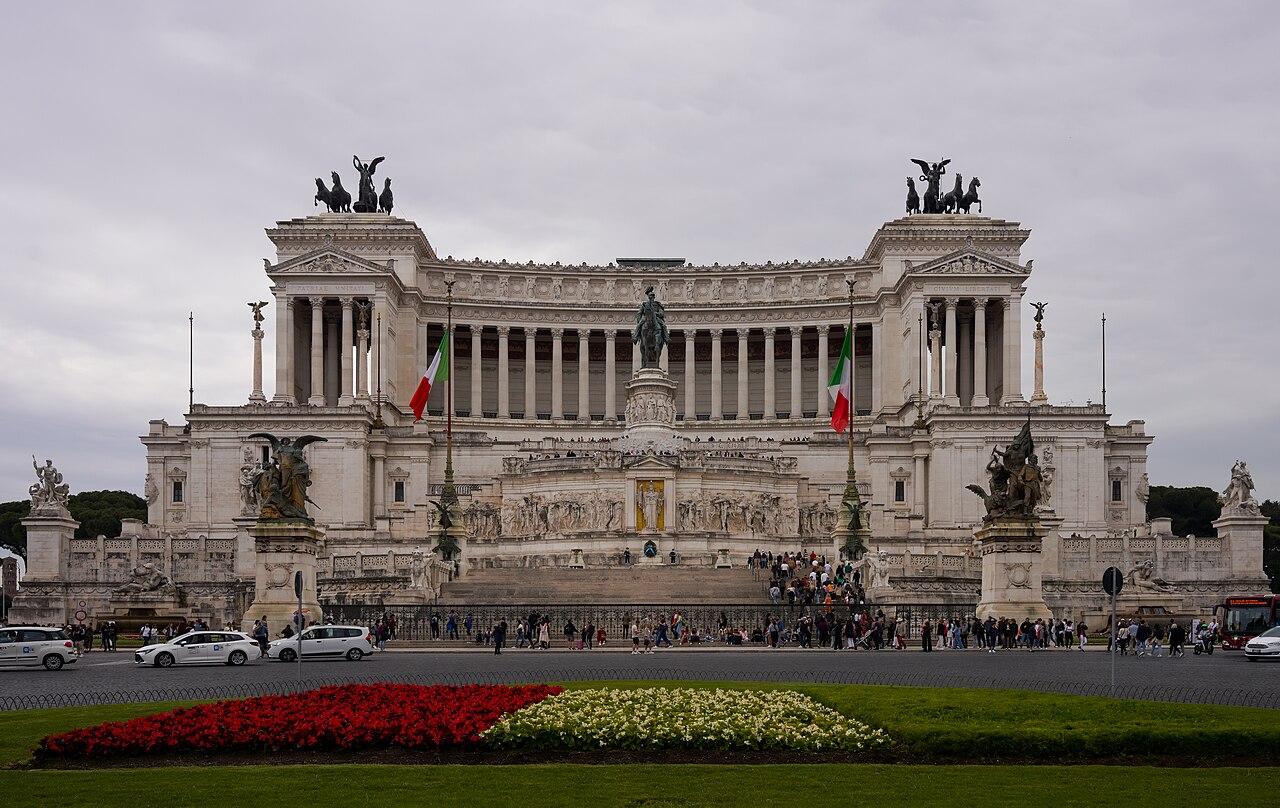
You're standing at the busiest junction in Rome, in front of a monument so white it seems to pull away from the rest of the city. The architect chose botticino, a bright marble from the north, which deliberately sets it apart from the warm all around it. Romans rarely use the official name and call it the typewriter, the wedding cake or the false teeth.
It's the national monument to , the first king of a united Italy, and it took a quarter of a century to build. That came at the price of a medieval neighbourhood: convents, churches, houses and part of the all vanished beneath it, along with the tower of the palazzo next door.
At the bottom of the steps an eternal flame burns at the tomb of the unknown soldier. Shortly after the First World War, a mother from Trieste who had lost her own son chose one of eleven nameless coffins in the cathedral of Aquileia, and it travelled here by train through the country, past stations packed with people.
On the left stands the . The small balcony in the middle of that facade is worth looking for, because that's where stood: in the 1930s he proclaimed his empire from it, and in 1940 he declared war, to a square black with people.
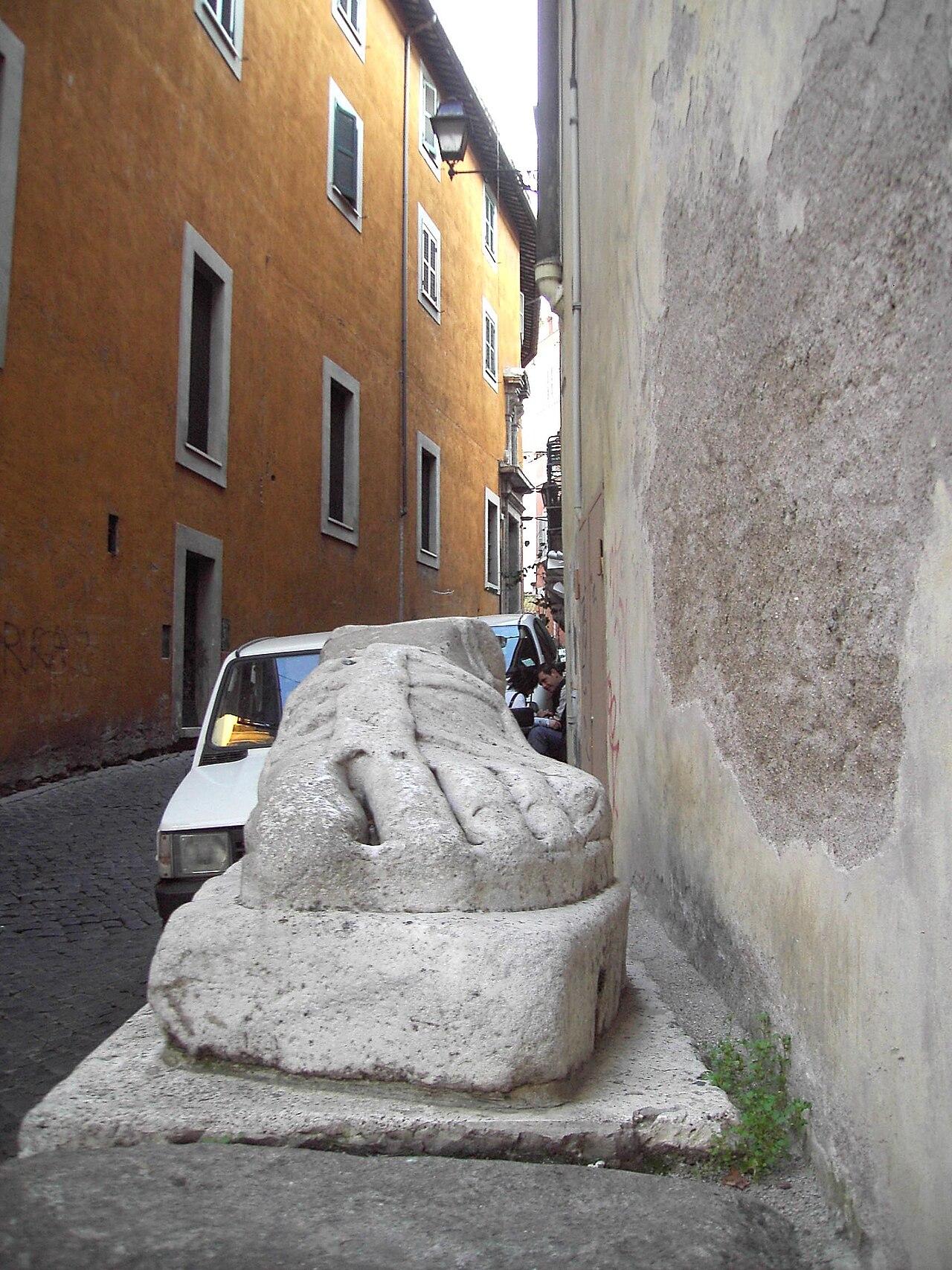
We take Via del Plebiscito and then Via del Gesù right after it, and keep going until a narrow street on the right where something enormous stands on the corner.
Sources. Story: Istituto per la Storia del Risorgimento Italiano, Complesso del Vittoriano; Polo Museale del Lazio (Palazzo Venezia); Treccani (Milite Ignoto) Photos: Photo 1: ThePhotografer (Wikimedia Commons, CC BY-SA 4.0) | Photo 2: ThePhotografer (Wikimedia Commons, CC BY-SA 4.0)