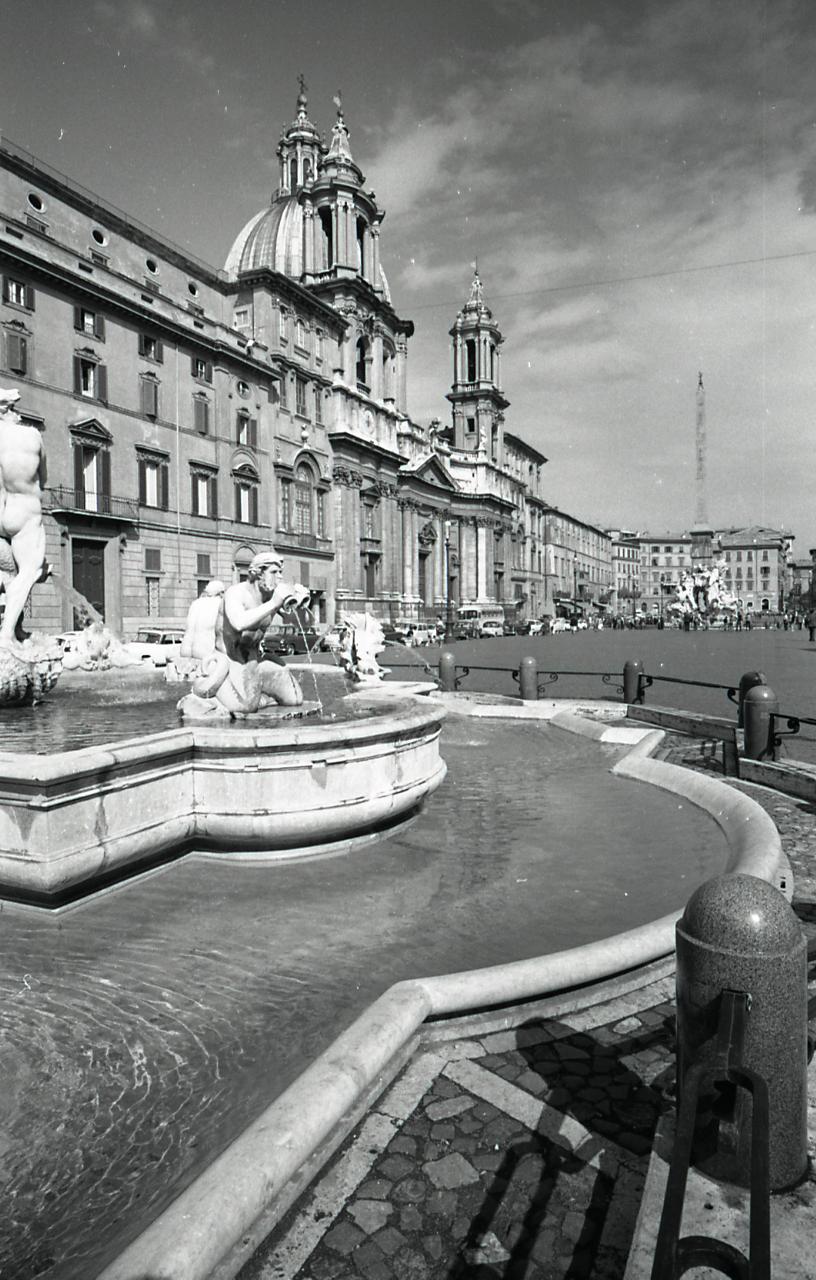
That long shape with the rounded end at the north side isn't a square at all but a floor plan. Around the year 86, the emperor had an arena built here for Greek-style athletic contests, with room for tens of thousands of spectators, and centuries later, when the structure fell into ruin, Romans raised their houses on the foundations of the old grandstands. The track stayed empty down the middle, and at the north end a piece of the original stadium still sits a few metres below street level.
In the summers of the seventeenth and eighteenth centuries, the fountain drains were sealed so the square would flood, and wealthy families drove their carriages through the water to cool off while everyone else looked on.
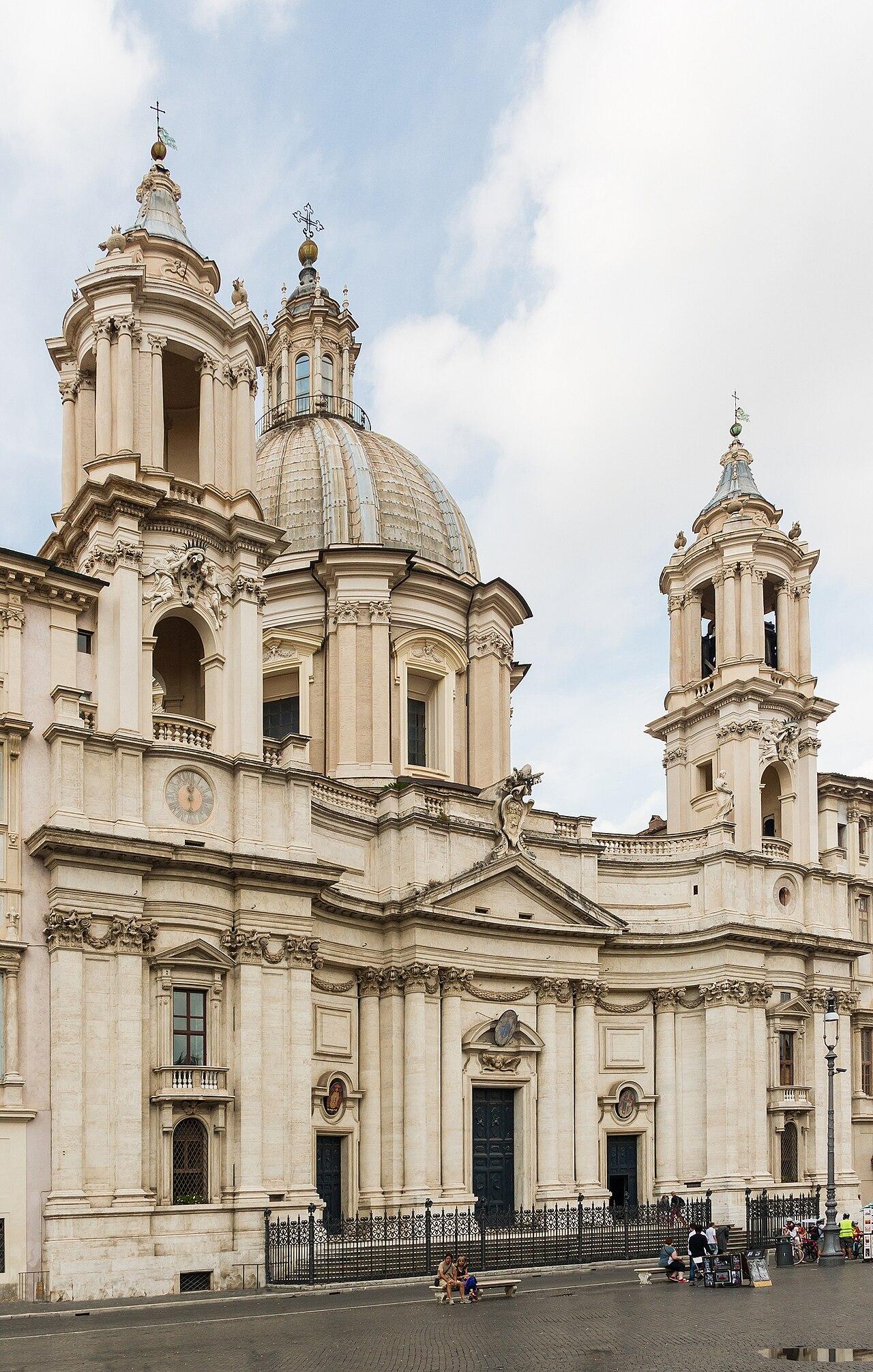
The great fountain at the centre is by and shows , one for each continent. The figure with the covered head is worth seeking out, because the city's loveliest false story belongs to him: supposedly he can't bear to look at 's church front beside him. Only the fountain was already there before that facade was even designed. He is the Nile, and his head is covered because nobody back then knew where the river had its source.
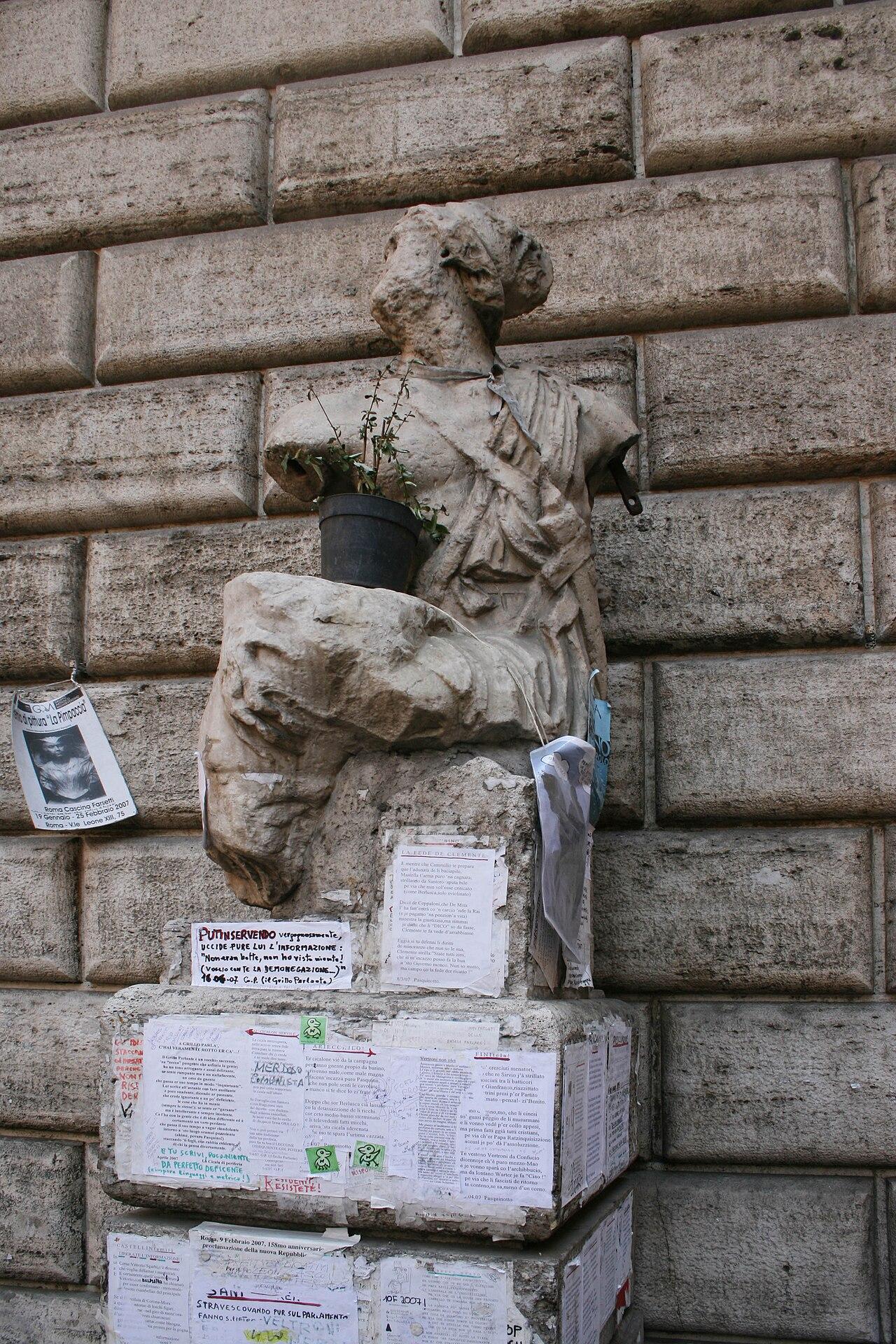
We leave the square at the south side by the fountain with the Moor and follow Via di Pasquino and Via del Governo Vecchio toward the market square.
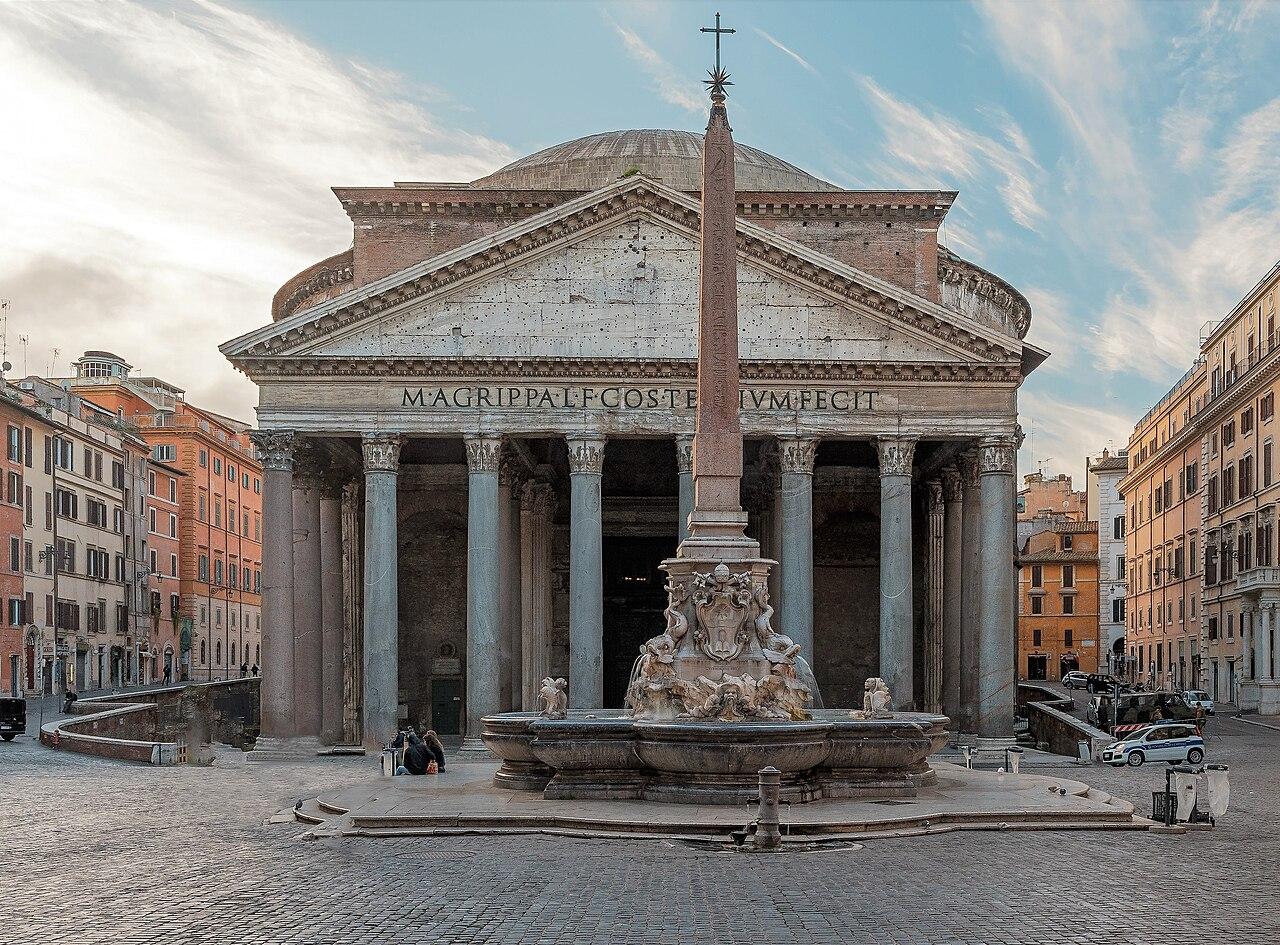
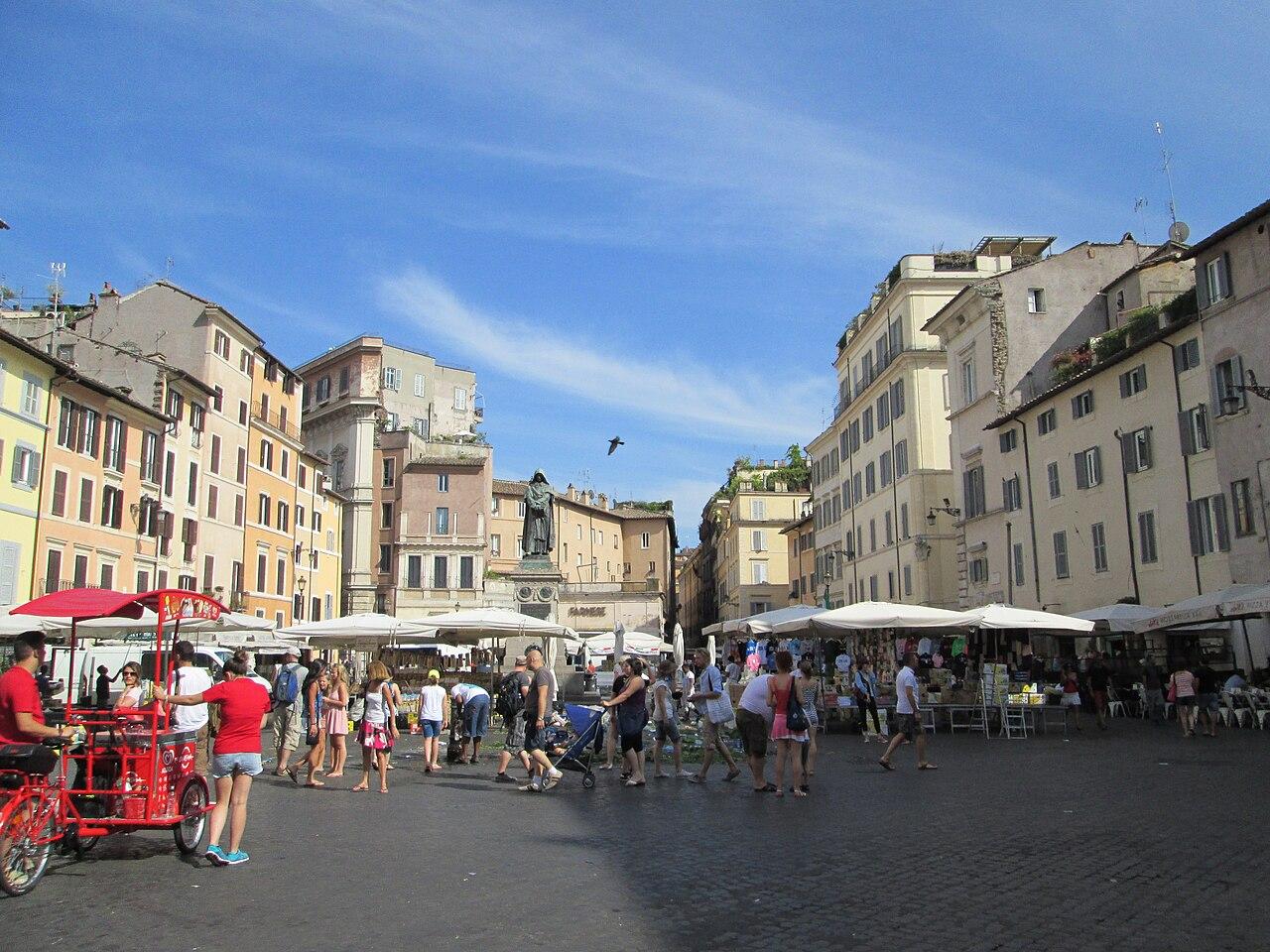
Sources. Story: Sovrintendenza Capitolina ai Beni Culturali (Stadio di Domiziano, Piazza Navona); Treccani (Fontana dei Quattro Fiumi) Photos: Photo 1: Paolo Monti (Wikimedia Commons, CC BY-SA 4.0) | Photo 2: engraving by Francesco Corsi (Wikimedia Commons, CC BY-SA 4.0)