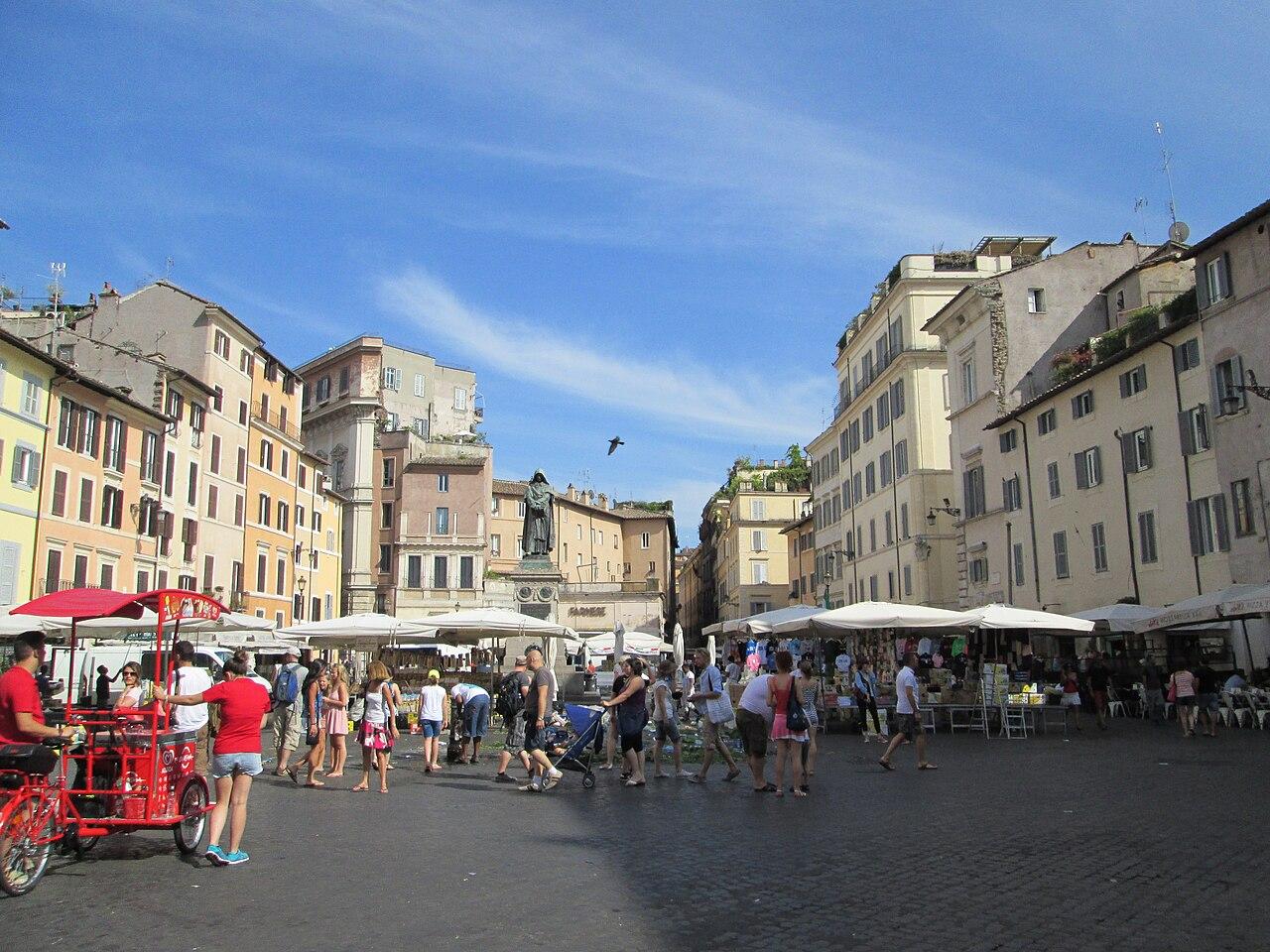
Of all the big squares in the old centre, this is the only one without a church, and you notice it right away: where everywhere else you'd find a façade covered in saints, here you get crates of tomatoes. The name is meant literally, because well into the fifteenth century this was a meadow outside the built-up area. had it paved in 1456, since the pilgrim route to St Peter's ran straight across it.
The streets around you carry the names of the trades that worked here. Via dei Cappellari belonged to the hatmakers, Via dei Balestrari to the crossbow makers, and Via dei Giubbonari to the coat sellers, where you'll still find clothing shops today.
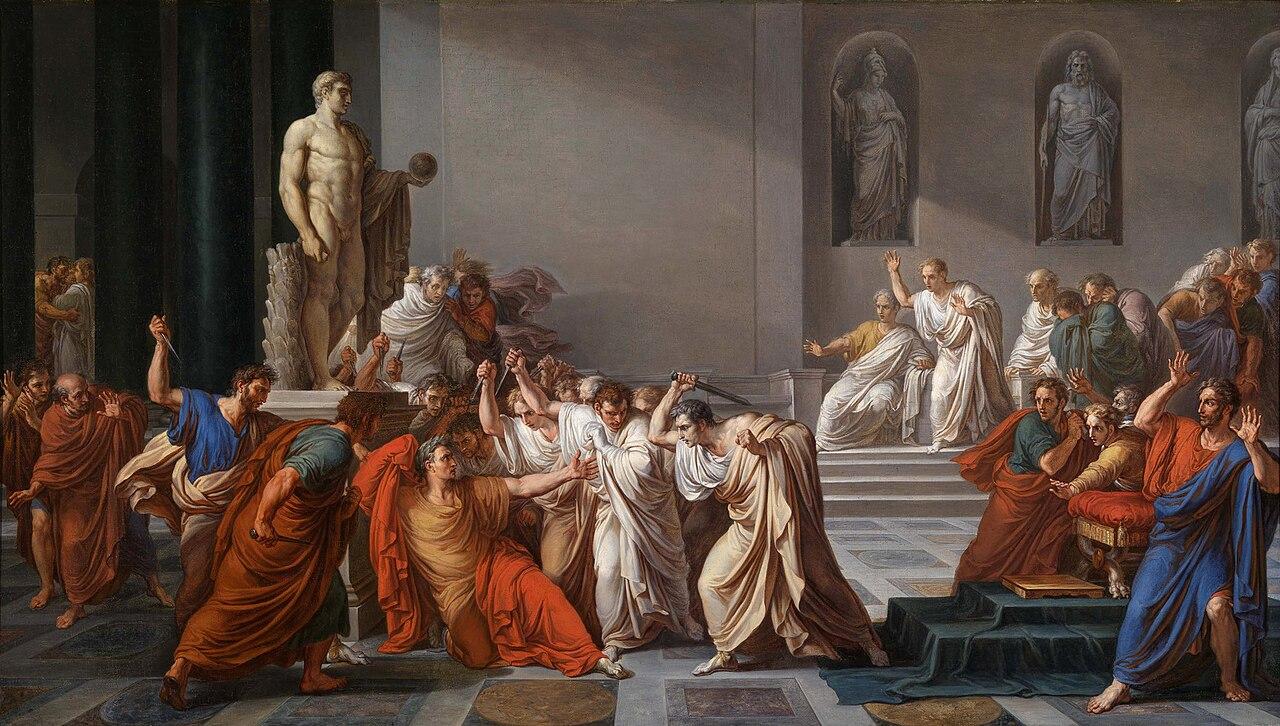
A few steps behind the square there's something worth tracing. On Via di Grotta Pinta the houses curve in a strange half circle, sitting on the foundations of the from 55 BC, the first stone theatre in Rome. The shape of a building that disappeared two thousand years ago still decides how you walk through here.
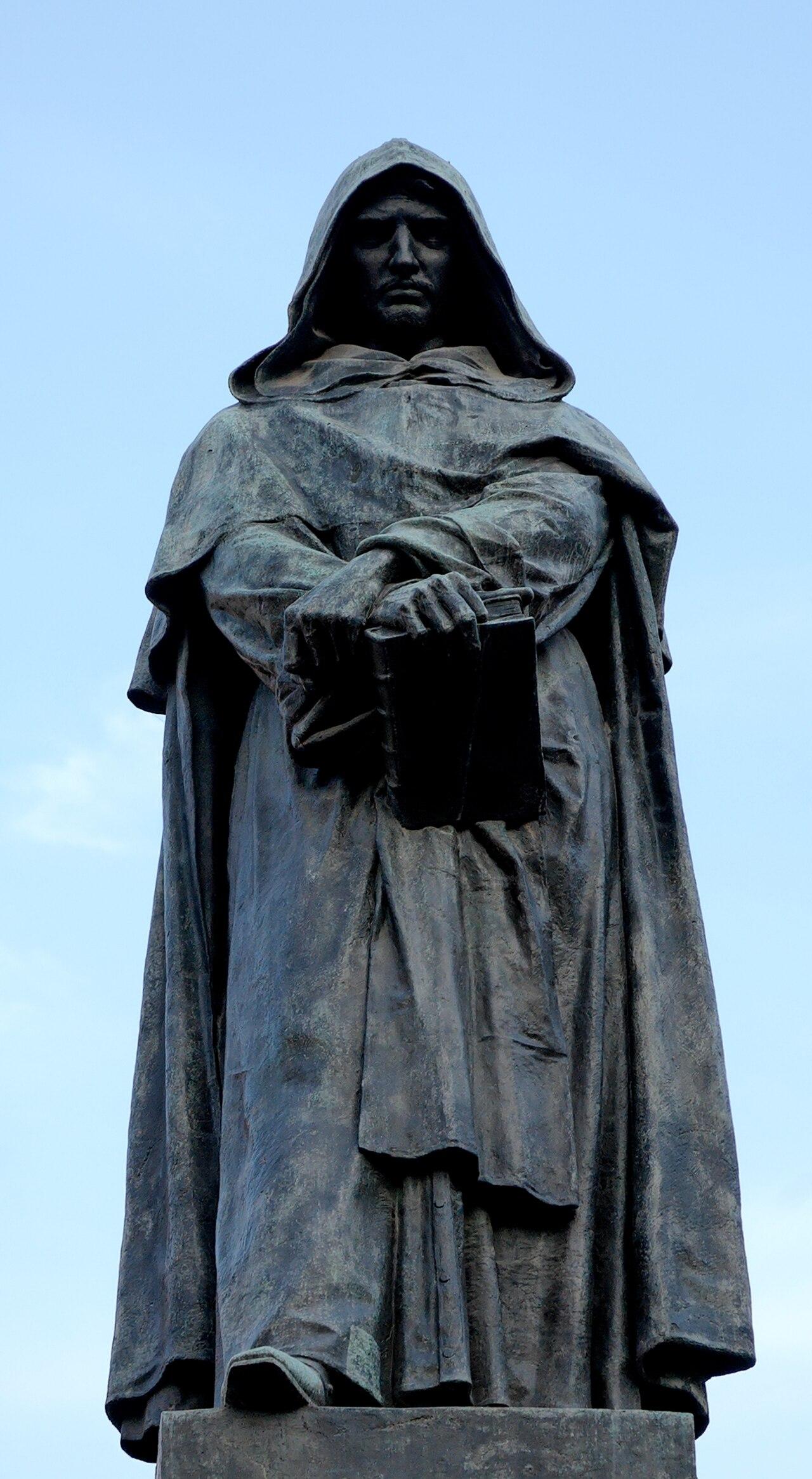
The hooded bronze figure in the middle is , a philosopher who was burned here in 1600, and whose full story belongs to the walk through the Rome of the executioner.
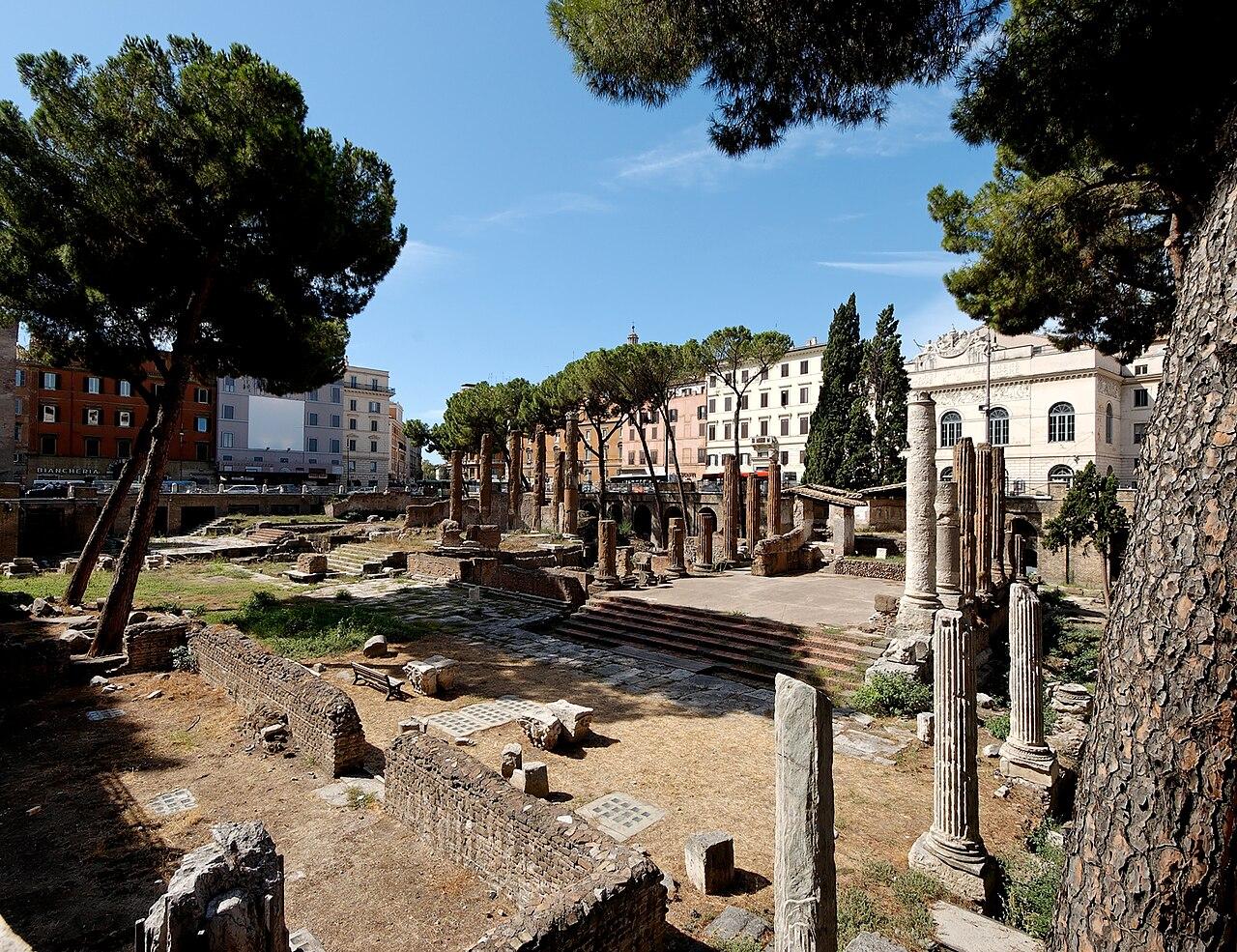
We take Via dei Giubbonari in the southeast corner and follow that shopping street to a busy crossroads with a sunken excavation.
Sources. Story: Sovrintendenza Capitolina ai Beni Culturali (Campo de' Fiori, Teatro di Pompeo); Treccani (Giordano Bruno) Photos: Photo: Carlat82 (Wikimedia Commons, CC BY-SA 4.0)