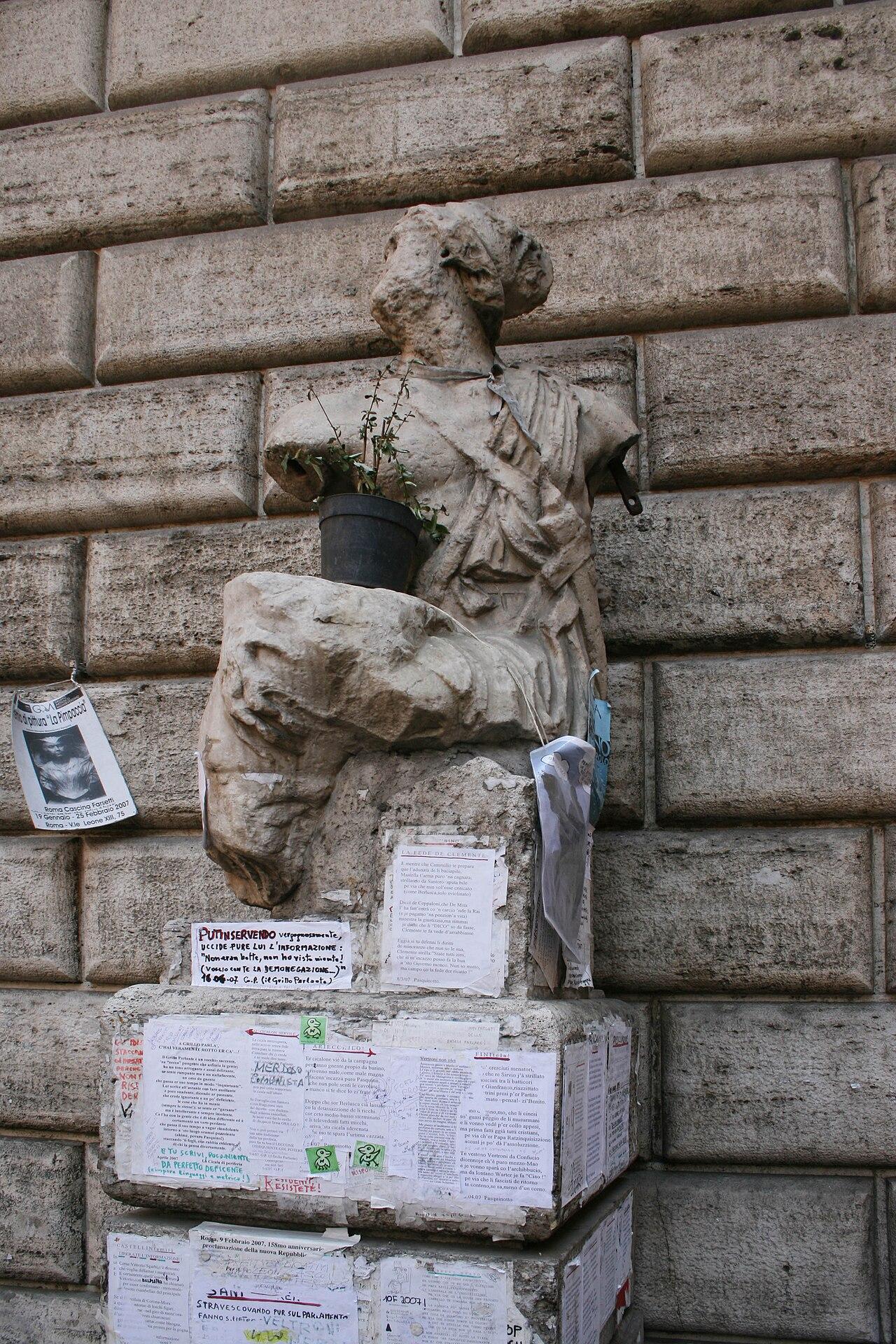
The walk ends where it began, at Pasquino, because this is where the conversation never stopped.
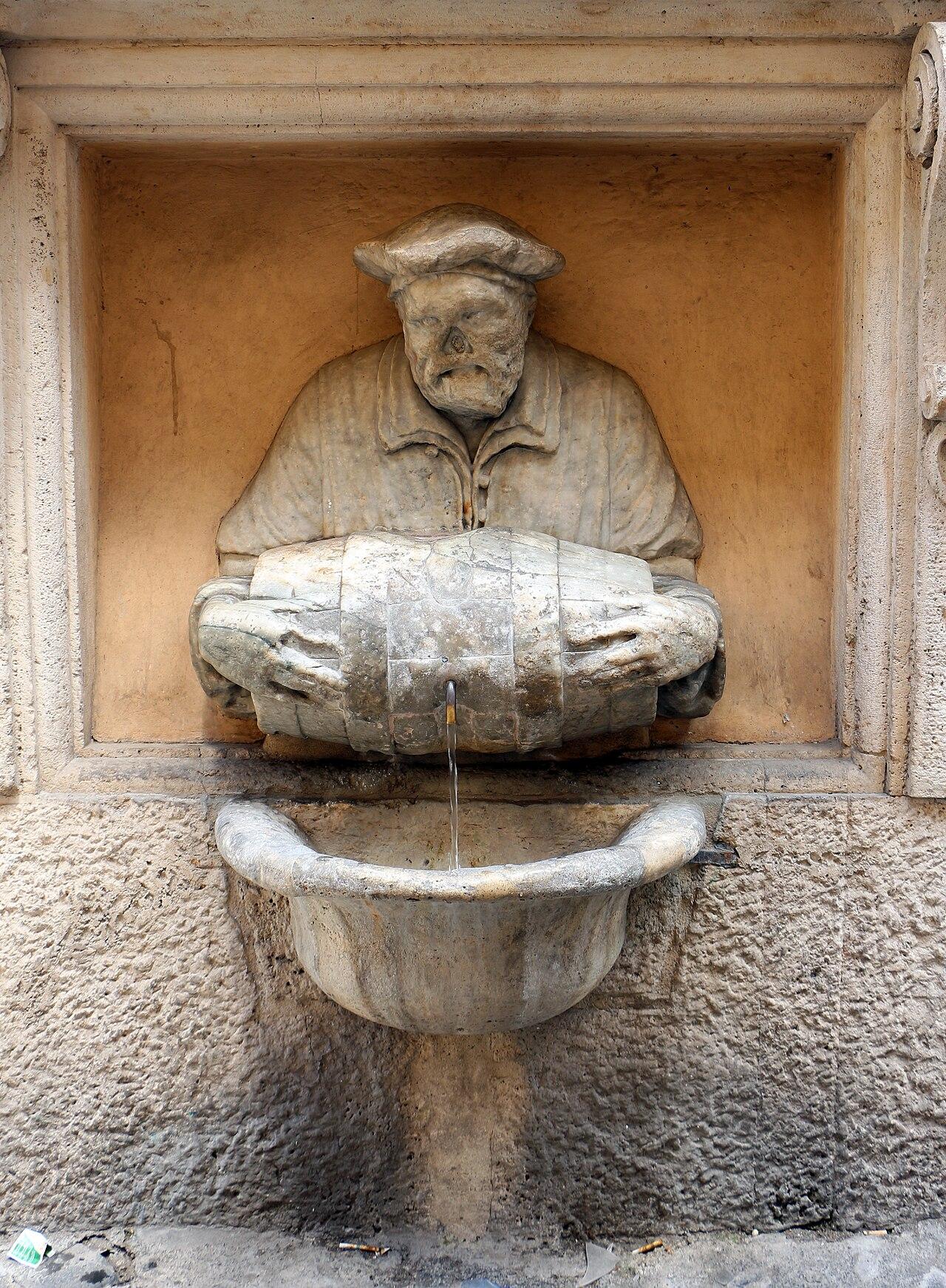
You've seen five of the group the Romans call the , the company of the witty. The sixth, , lies about a fifteen minute walk to the north in the street named after him: a reclining beside a fountain the Romans found so repulsive that they named him after a baboon.
The statues spoke because nobody else could. Under there was no free press and no public debate, so criticism was pasted onto a piece of marble anonymously at night and passed around the city by word of mouth during the day. Anyone caught risked , and still it carried on.
Today notes still hang on Pasquino: about rents, about the city council, about whoever happens to be in charge. The paper gets cleared away fairly regularly and just as cheerfully reappears.
That makes this the oldest protest tool still working in Europe, and the loveliest thing about it is that it costs nothing and anyone can join in.
From this square you reach Piazza Navona in two minutes, and you'll find buses on Corso Vittorio Emanuele, a hundred metres to the south.
Sources. Story: Sovrintendenza Capitolina ai Beni Culturali (congrega degli arguti, Il Babuino); Treccani (statue parlanti di Roma) Photos: Photo: Wikimedia Commons, CC BY-SA 2.0