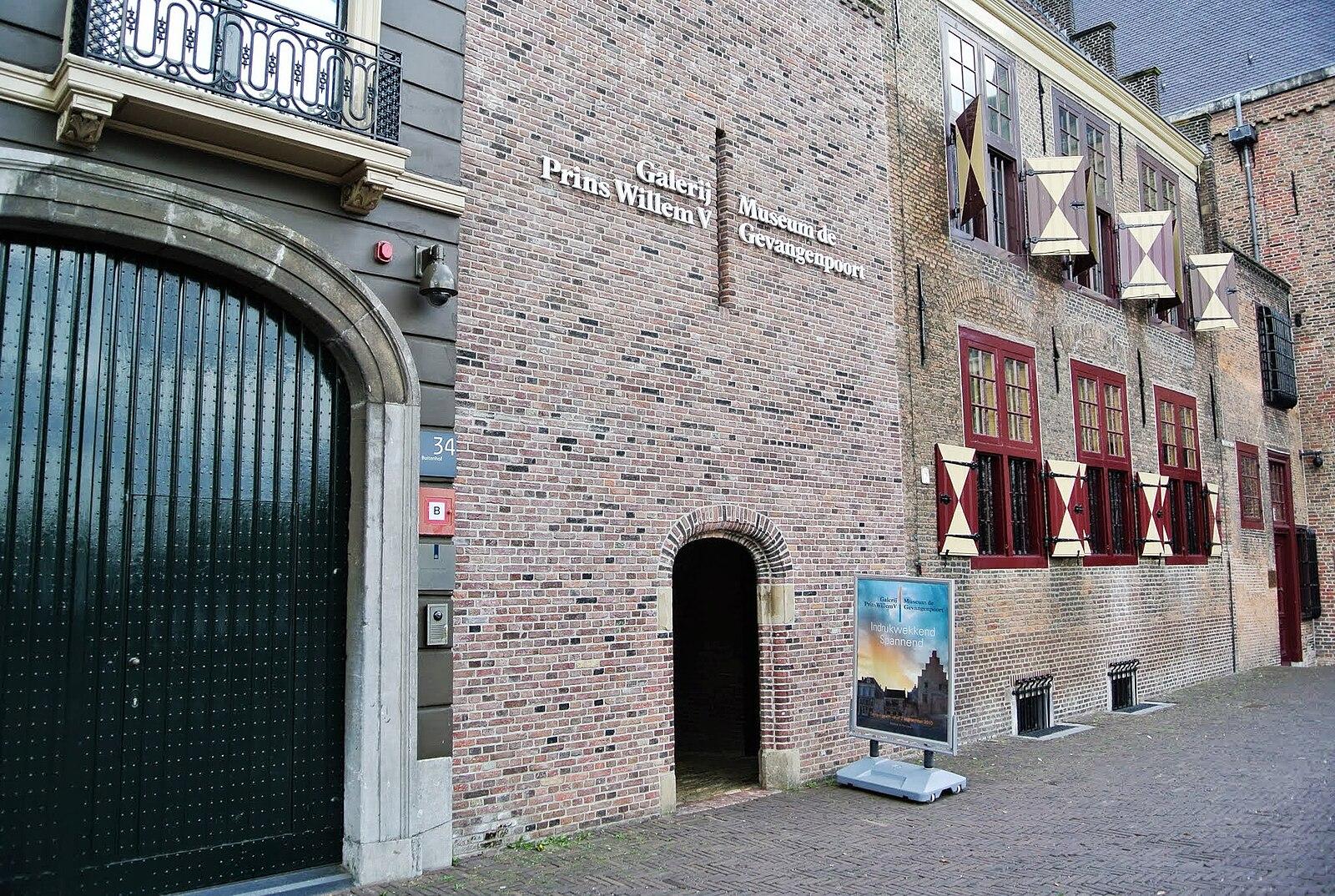
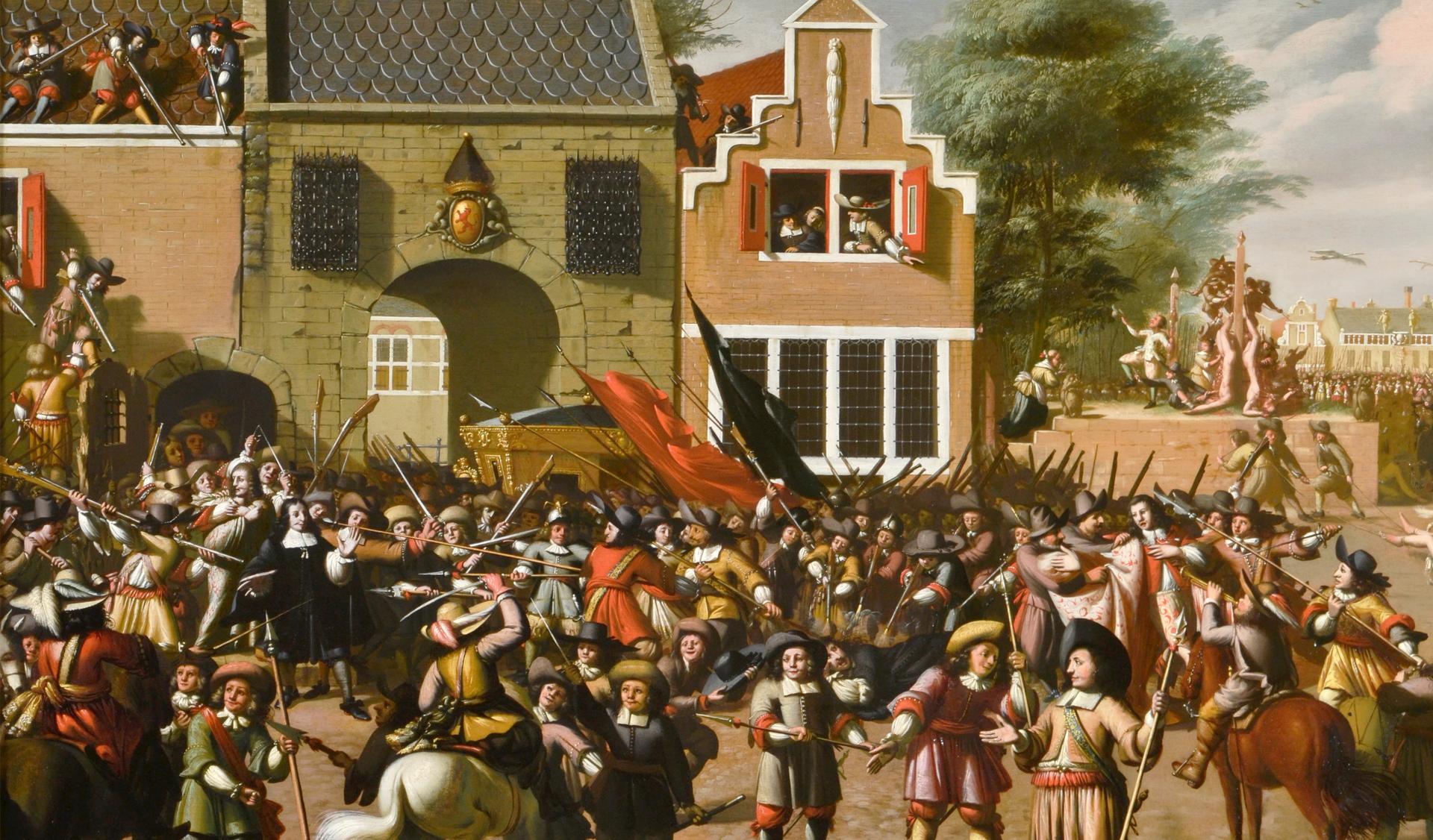
On the small square called De Plaats, beside the medieval prison gate known as the , the most violent moment in Dutch political history took place in 1672. That year is remembered as the , the year of disaster, when the Dutch Republic came under attack from several sides at once and the country fell into panic.
Johan de Witt had by then served for almost twenty years as of Holland, the most powerful office in the Republic. Under his leadership the abolished the post of , while the prince of Orange was still allowed to command the army.
His fall began with an accusation by Willem Tichelaar, a barber surgeon of doubtful reputation, who claimed that Cornelis de Witt had asked him to murder . Cornelis was arrested and sentenced although nothing was ever proved. When Johan came to visit his brother in prison, he walked into the trap. A crowd dragged both men outside and killed them, and their bodies were mutilated afterwards. Fingers, ears and tongues were cut away, and eyewitnesses wrote that parts were eaten or thrown to dogs.
Relics from that afternoon survive, a finger and a tongue attributed to the brothers, passed down through owners including Mayor Nicolaas Witsen and a group of Remonstrants.
Looking for more of the darker corners of this city? Our walking routes pass by them.
Sources. Story: Haags Historisch Museum, Tongue and finger of Johan and Cornelis de Witt: https://haagshistorischmuseum.nl/en/collectie/masterpieces/tongue-and-finger-of-johan-and-cornelis-de-witt/ and Museum de Gevangenpoort: https://gevangenpoort.nl/en/explore/stories-about-constitutional-state-and-peace/the-tongue-and-finger-of-the-de-witt-brothers/ Photos: Haags Historisch Museum