The little garden Lope wrote about lies behind the house, and it's the part you'd never guess at from the street. It was recreated from his own descriptions, with a vegetable patch, a few fruit trees and a bench, and standing here you can hear the traffic a few metres away while nothing in your line of sight belongs to this century.
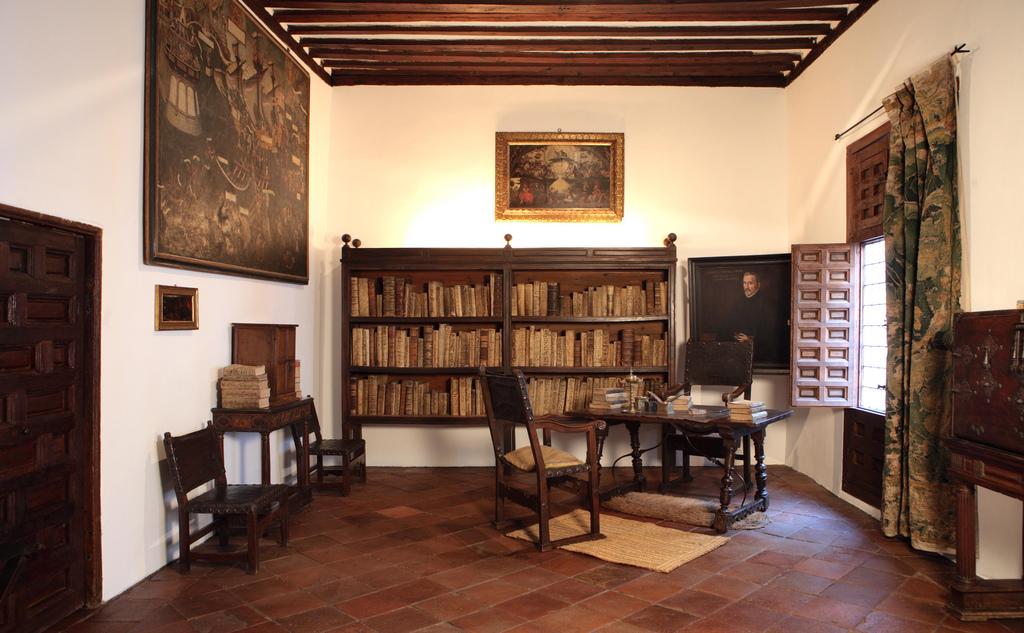
The tour takes you through the rooms the way a well-off household used them around 1620: the study with its books, the estrado that served as a sitting area for the women of the house, the bedrooms of the daughters and those of the maids. At the top of the stairs is the oratory where Lope prayed after he became a priest, a tiny room, just a few steps from the bed he slept in.
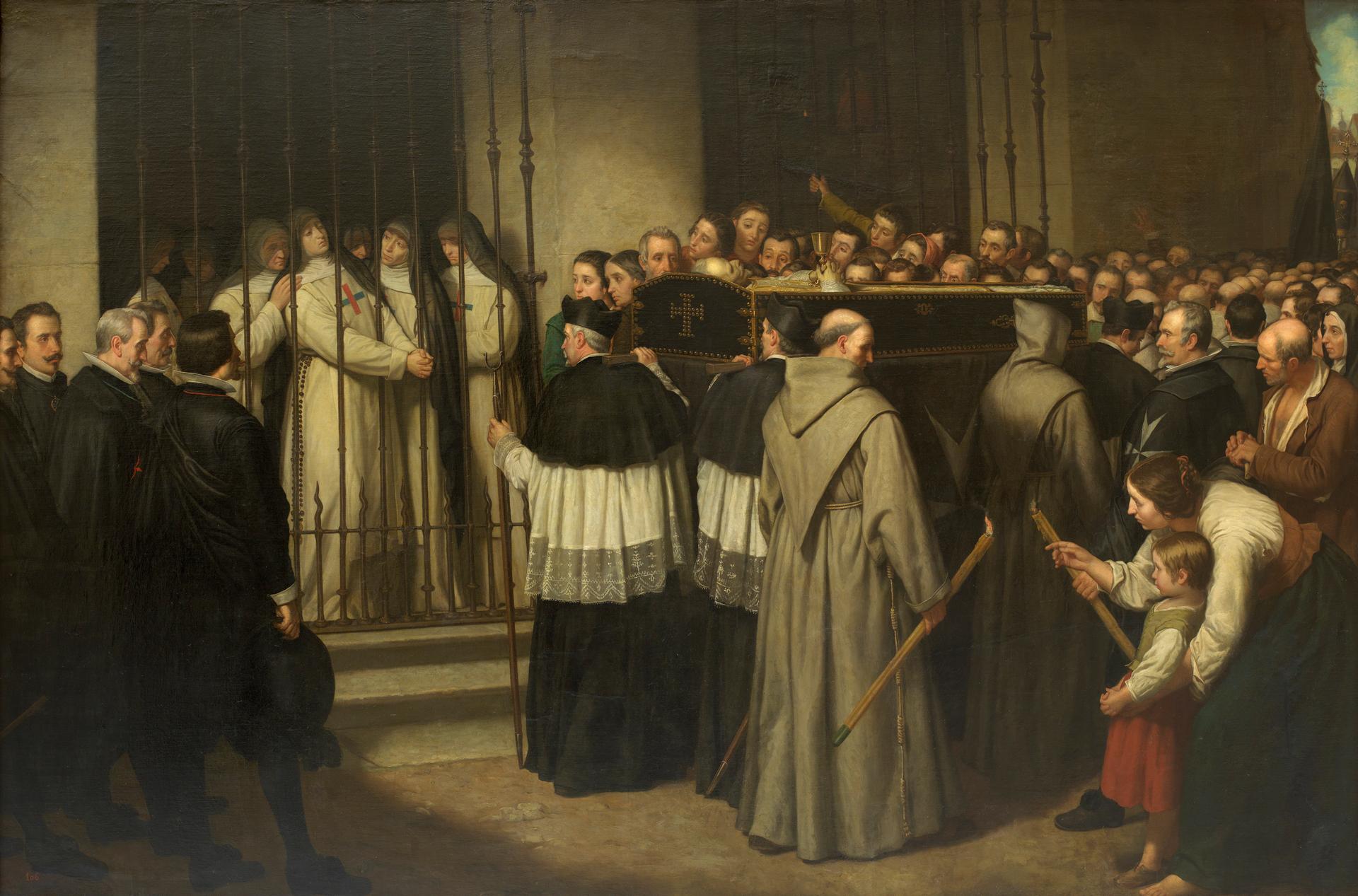
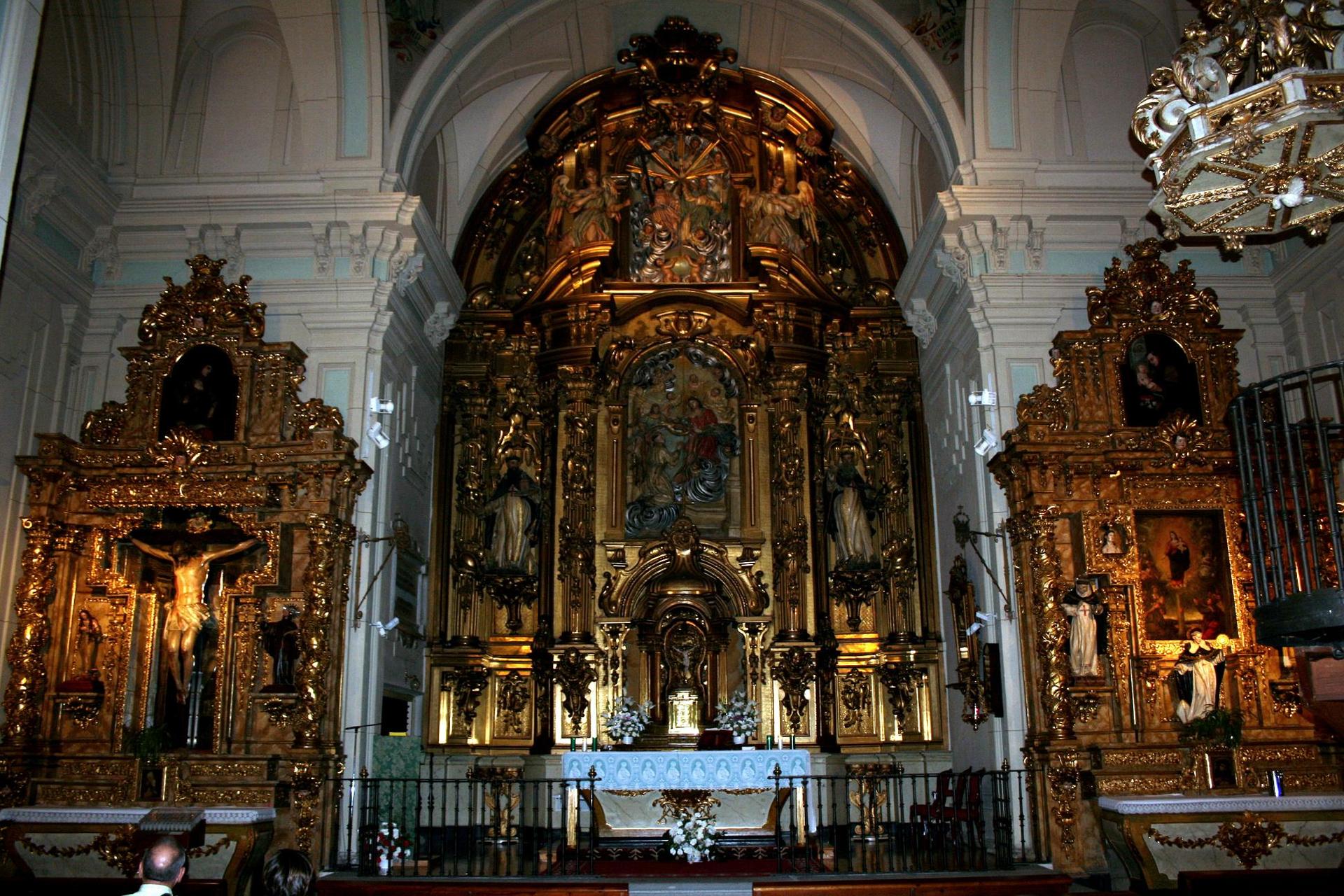
Some of the furniture comes from the convent a few streets away, where his daughter was a nun and which you'll pass before long.
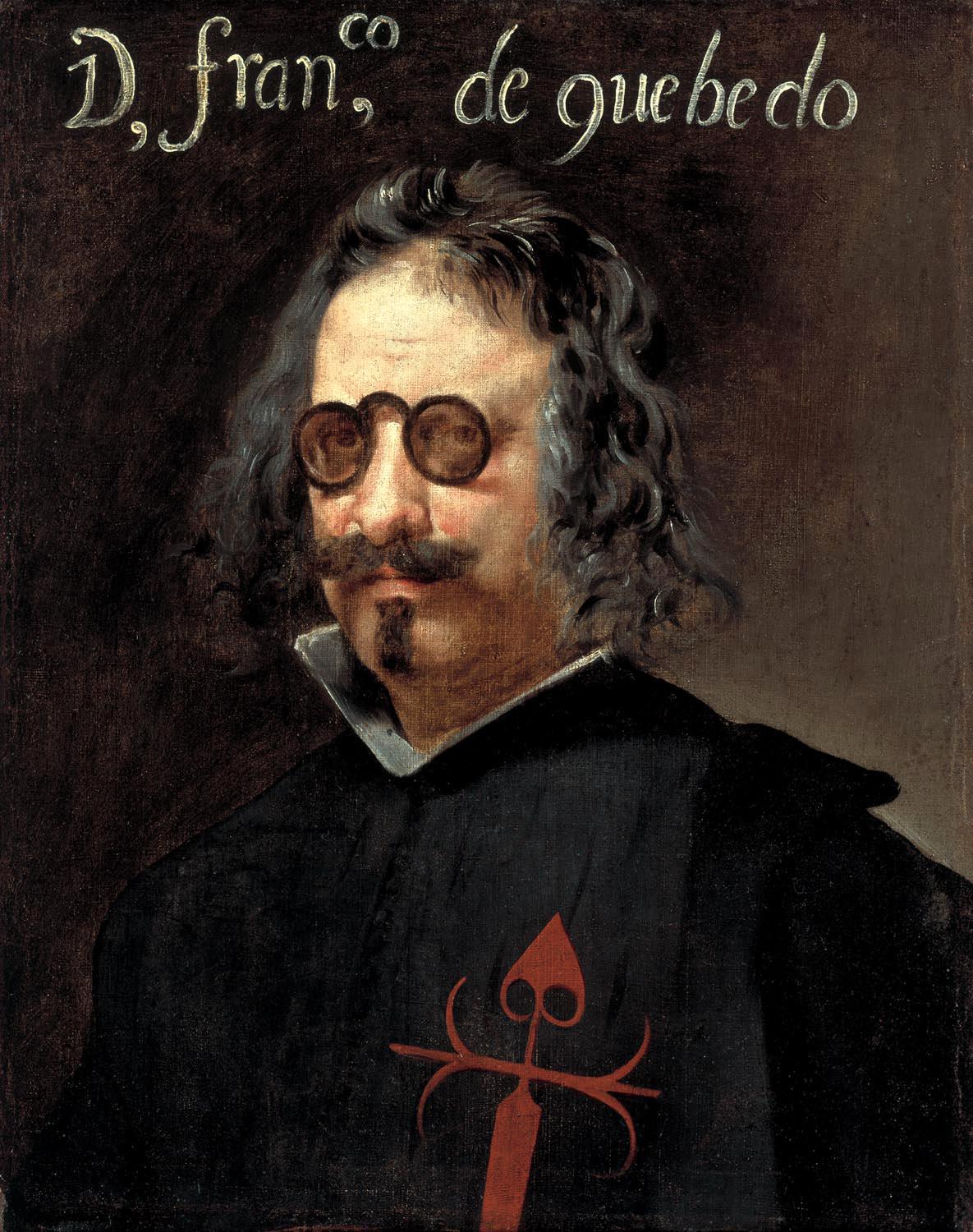
Back outside, we take the first street on the right, the Calle de Quevedo, as far as the corner with the Calle de Lope de Vega.
Sources. Story: Comunidad de Madrid, Casa Museo Lope de Vega, information leaflet and dossier on the building at Calle de Cervantes 11; Real Academia Española, Casa Museo Lope de Vega. Photos: Photos of the study and the oratory: Turismo Madrid Consorcio Turístico, CC BY 2.0 via Wikimedia Commons.