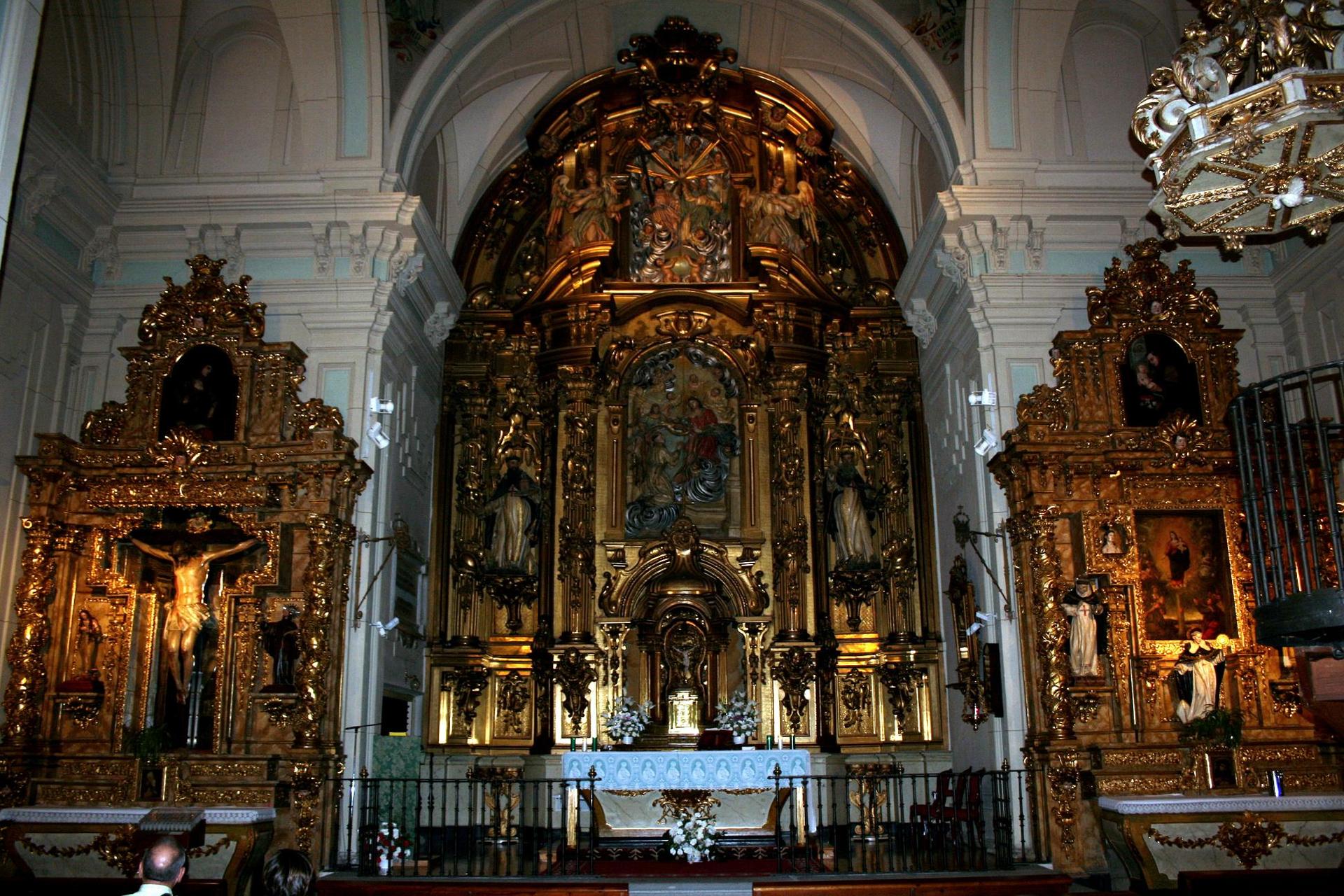
The church behind this facade is small, narrow and strikingly plain, and that is exactly what makes it special, because Spain keeps its most famous writer, the author of , in a convent chapel that most visitors walk straight past, with no grand tomb, no admission and no sign out on the street.
The memorial where the remains found in 2015 were laid to rest stands in the nave, and there isn't much to it: a slab with an inscription, in a spot that nobody can say for certain is actually the right one.
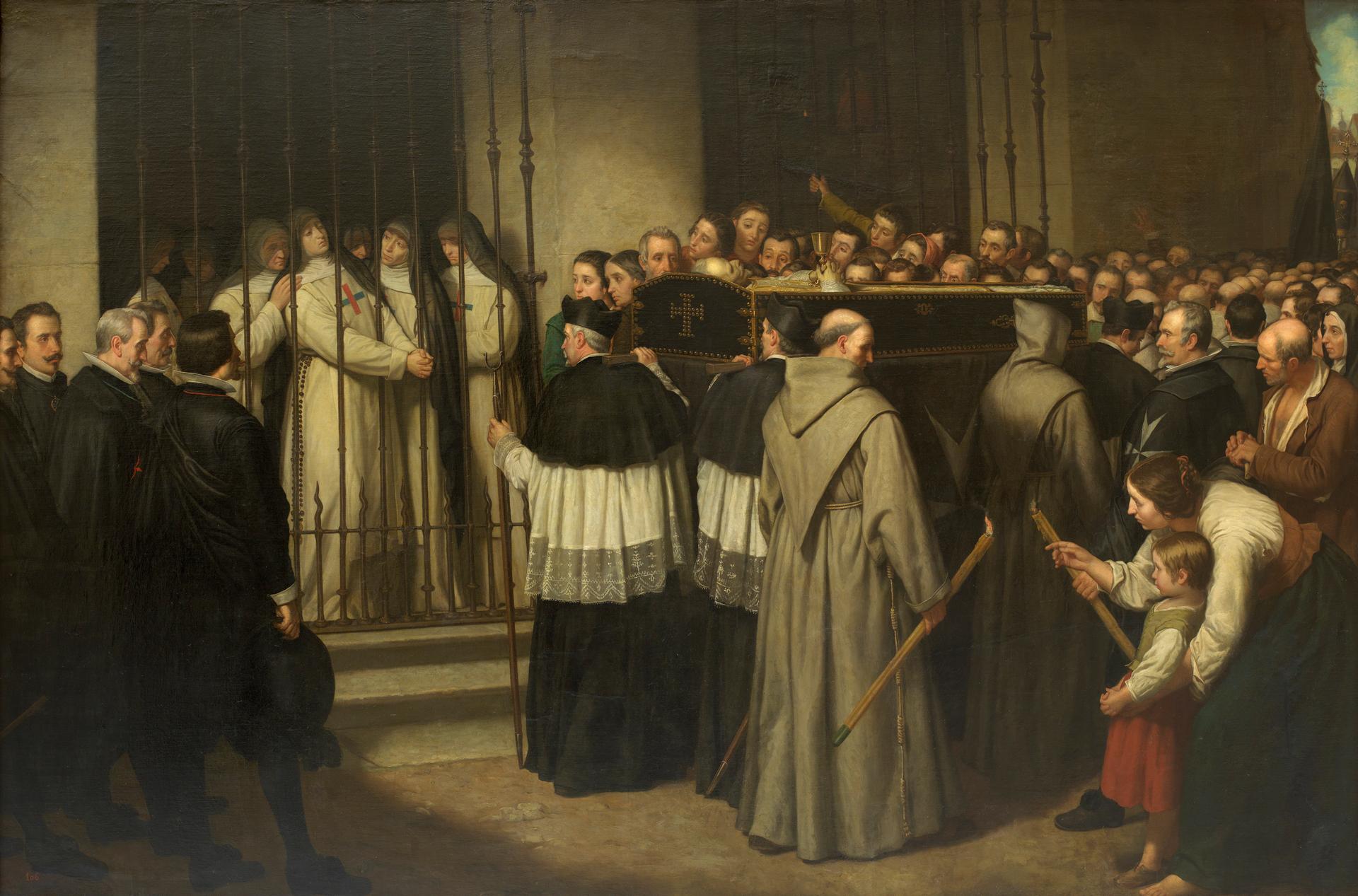
On the right runs the grille behind which the follow the services, because this community has lived here in seclusion for more than four centuries, which means the church only opens around the services and the rest of the convent stays closed to everyone, including the garden where the grave is thought to have lain.
Outside, we follow the Calle de Lope de Vega west to the Calle del León, where we turn right and carry on to the Calle de las Huertas.
Sources. Story: Universidad Complutense de Madrid, Tribuna Complutense, on the investigation into the remains of Cervantes; Asociación de Academias de la Lengua Española, itinerario Letras y espadas; Hispanopedia, Convento de las Trinitarias Descalzas. Photos: Photo of the church of the Trinitarias Descalzas: Enrique Cordero, CC BY-SA 2.0 via Wikimedia Commons. Photo of the plaque: J.L. de Diego, public domain via Wikimedia Commons.