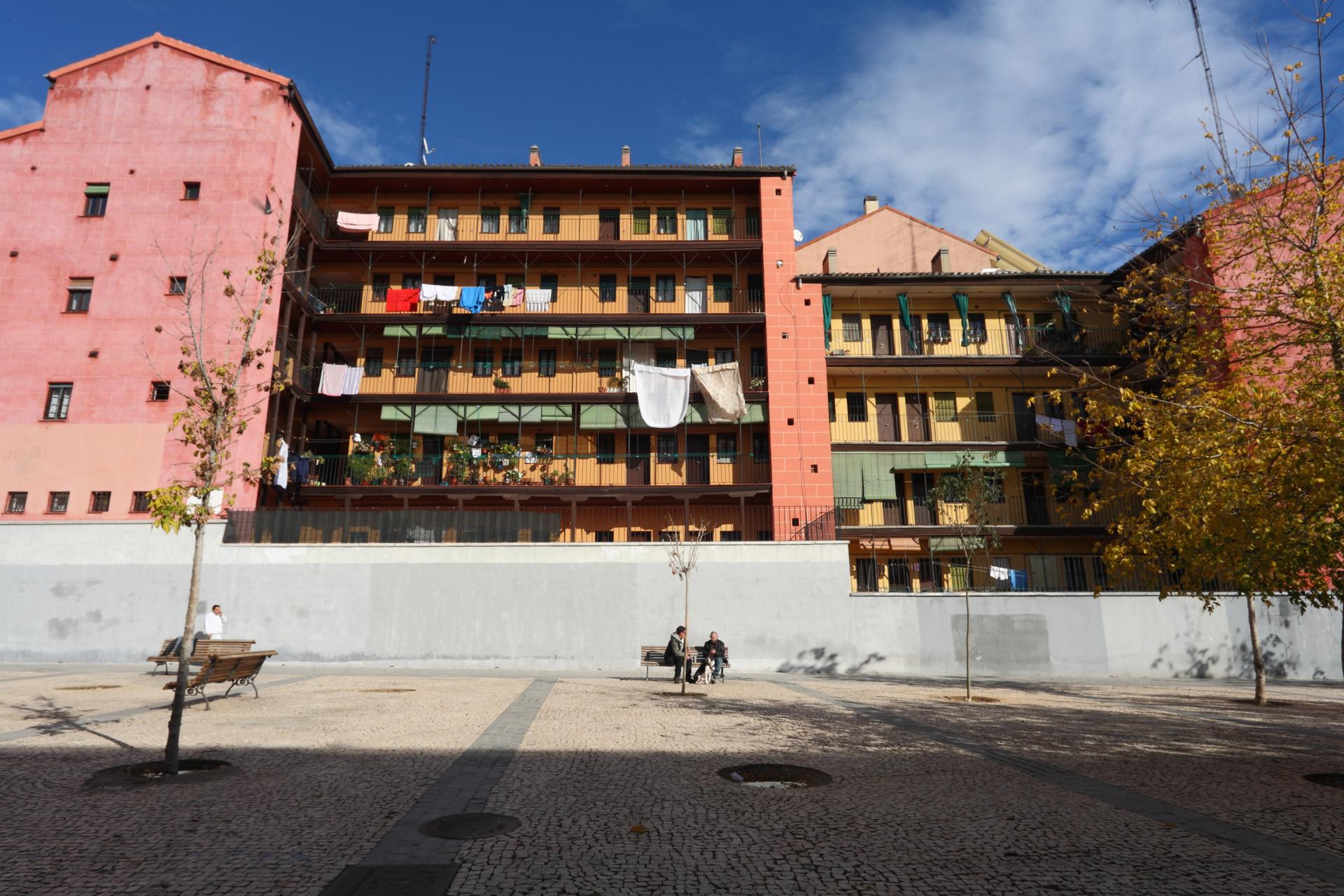
The three buildings around this little square each come from a different century, which makes it just about the only spot in the centre where you can read the city layer by layer. The oldest is the brick tower to your right, the Torre de los Lujanes from the fifteenth century, with a horseshoe arch above the door that still goes back to the days of the Moorish craftsmen. That makes it the oldest civic building in Madrid, older than the capital itself.
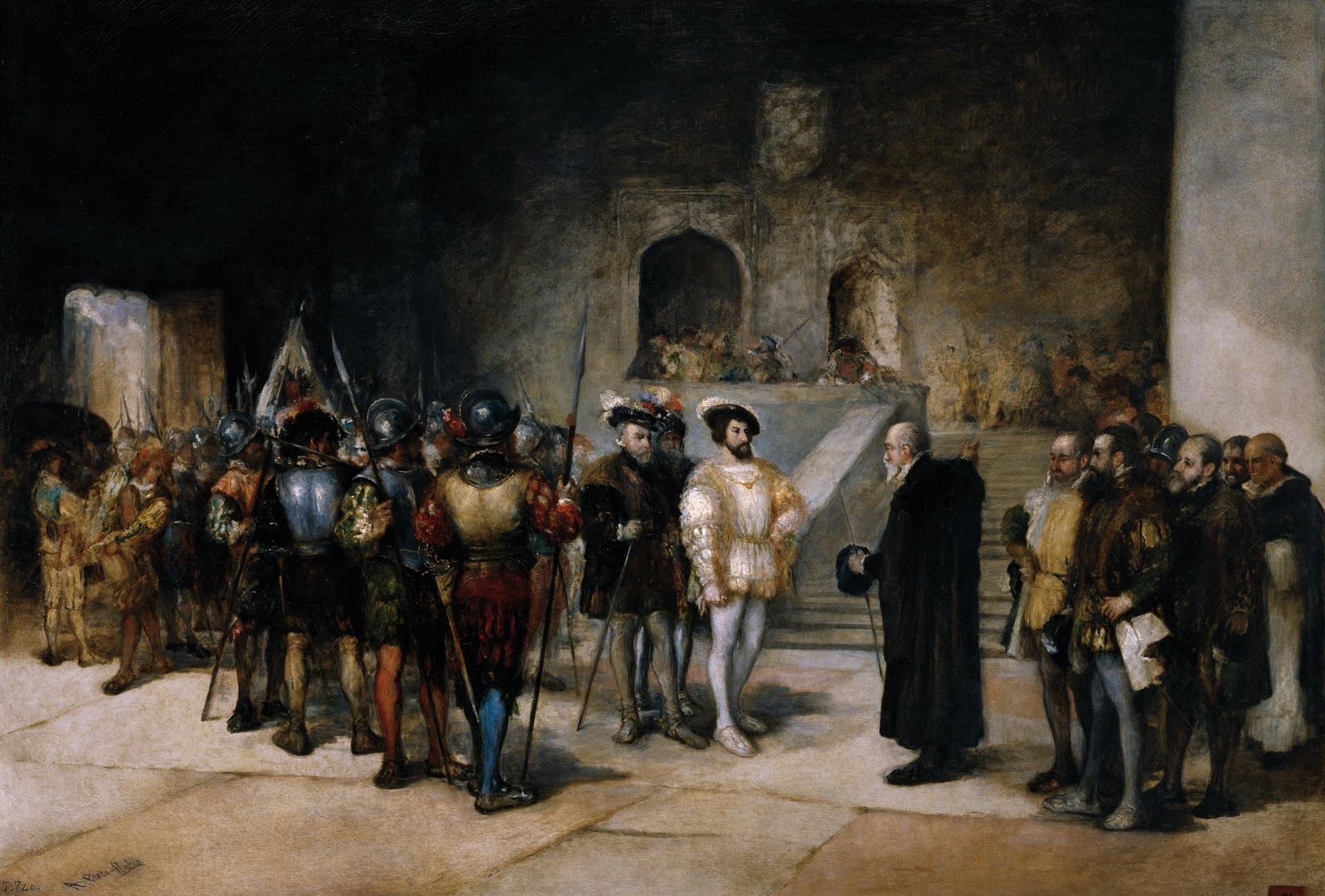
According to a stubborn legend, the French king was held prisoner here after he was captured at in 1525. Historians lean towards the idea that he stayed in the , though that has never cost the tower its nickname.
The building on the west side is the old town hall, begun in 1644 by the same architect who finished the , and for centuries it served as council house and prison at once. Until 2007 Madrid was governed from this square, after which the city administration moved to the old post office palace at .
In the middle stands , the admiral who assembled the fleet that later went down as the . He died before it set sail.
We follow the Calle Mayor further down, until a small monument with a statue of an angel appears on your right.
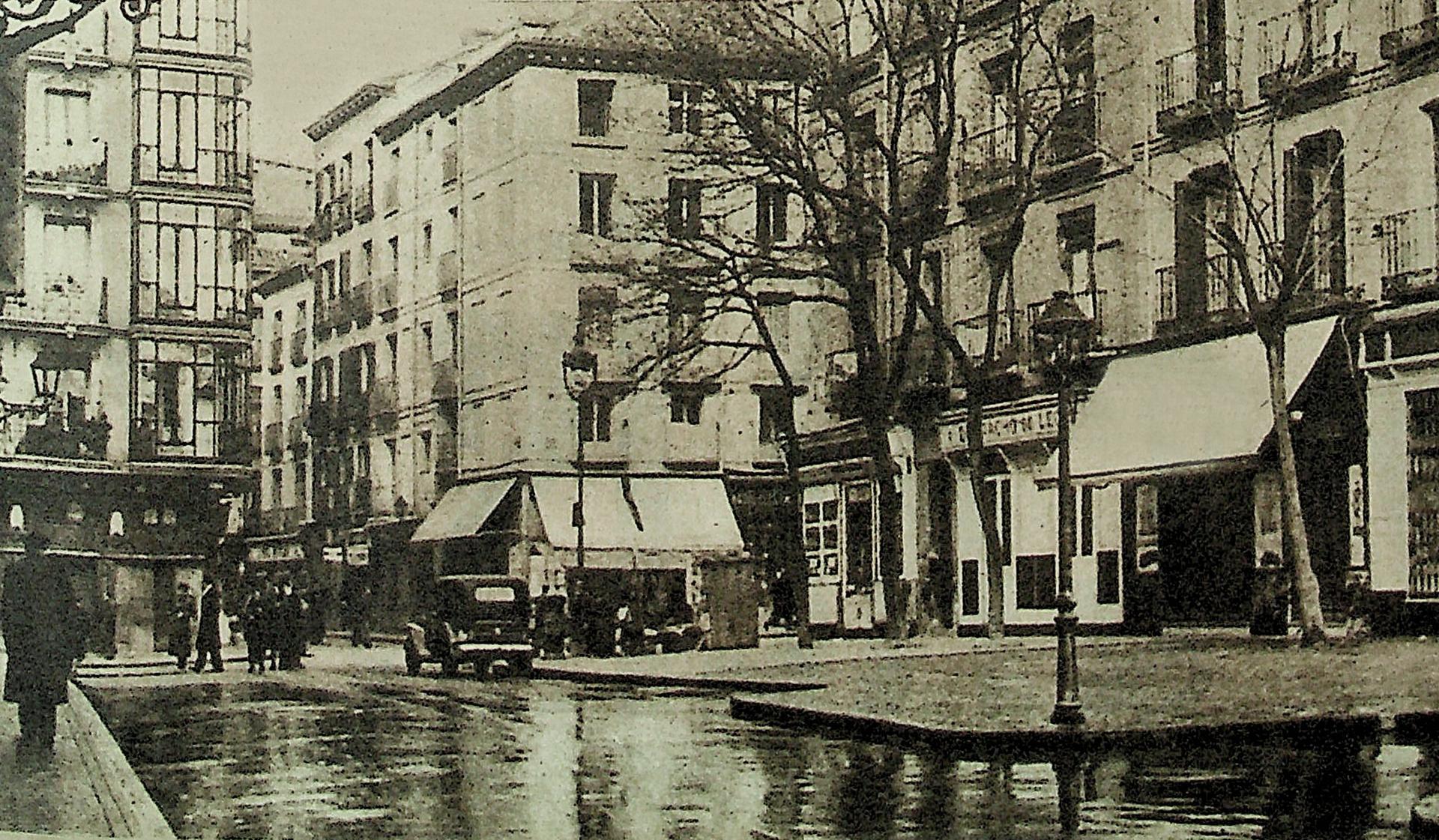
Sources. Story: Ayuntamiento de Madrid, Memoria de Madrid; esMadrid, Ayuntamiento de Madrid. Photos: Antonio Pérez Rubio, Francisco I, rey de Francia, entrando prisionero en la Torre de los Lujanes, circa 1884, Museo Nacional del Prado, public domain via Wikimedia Commons. Photo of the Casa y Torre de los Lujanes: Luis García, CC BY-SA 2.0 via Wikimedia Commons.