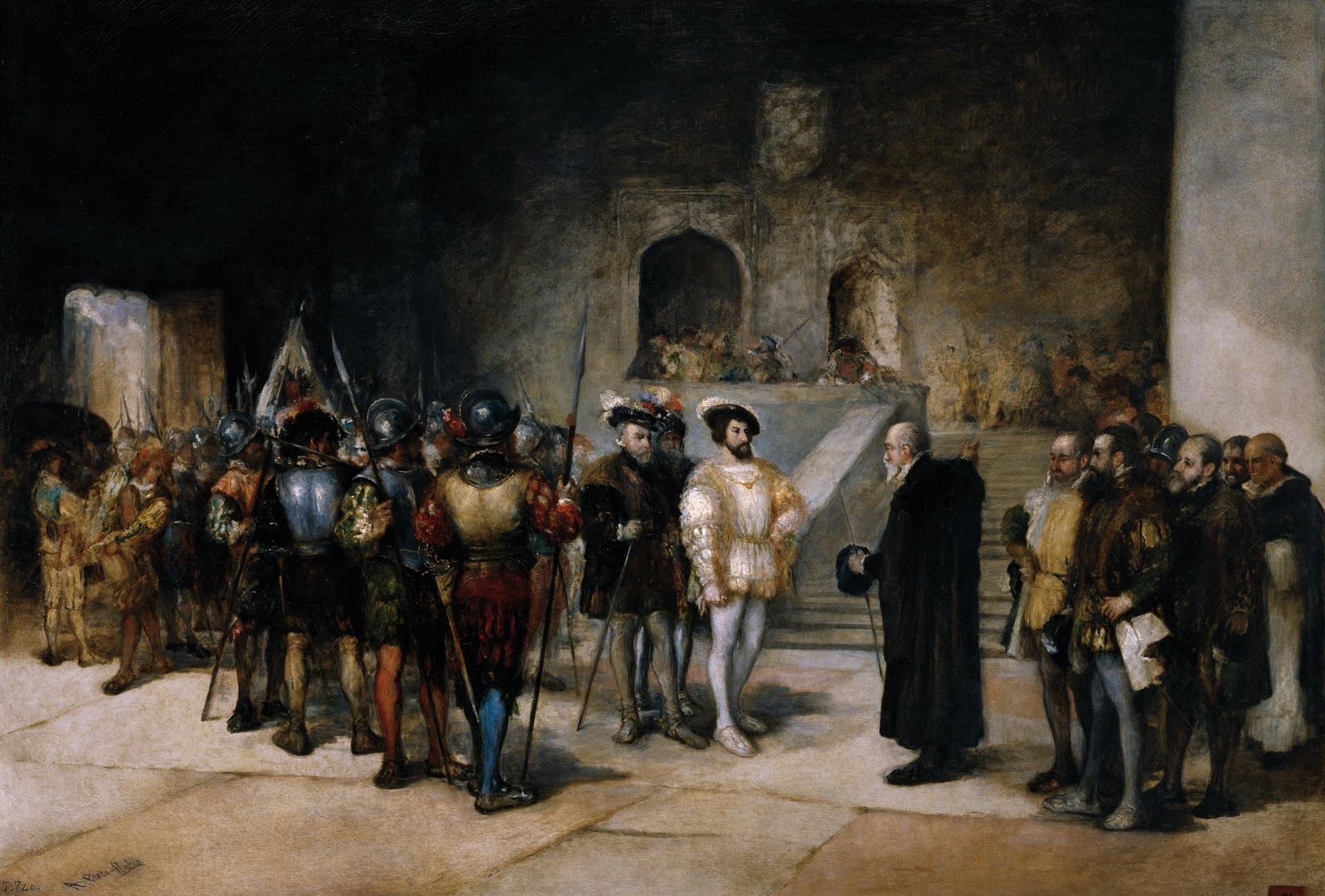
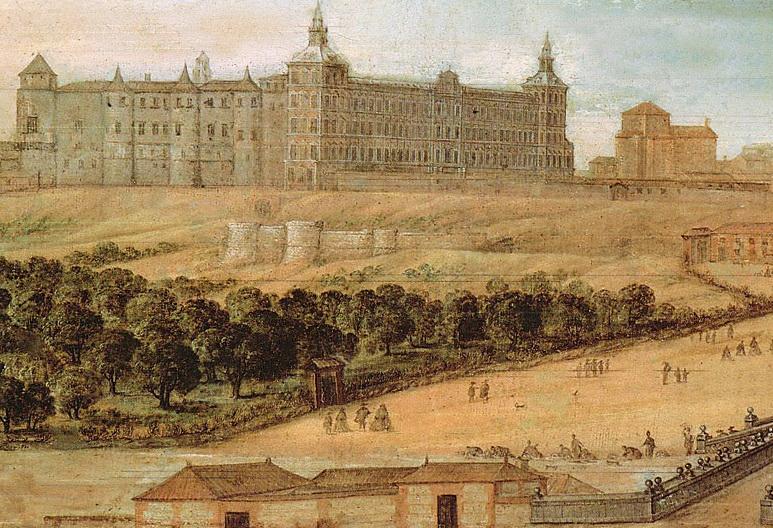
On Christmas night in 1734, fire broke out in the old , the fortress that stood here and where Spain's kings had lived for two hundred years. The flames kept going for four days. People flung paintings out of the windows to save whatever they could, and that is how survived, cut from its frame by all accounts. Hundreds of other works burned, along with the archive and the furnishings of an entire court.
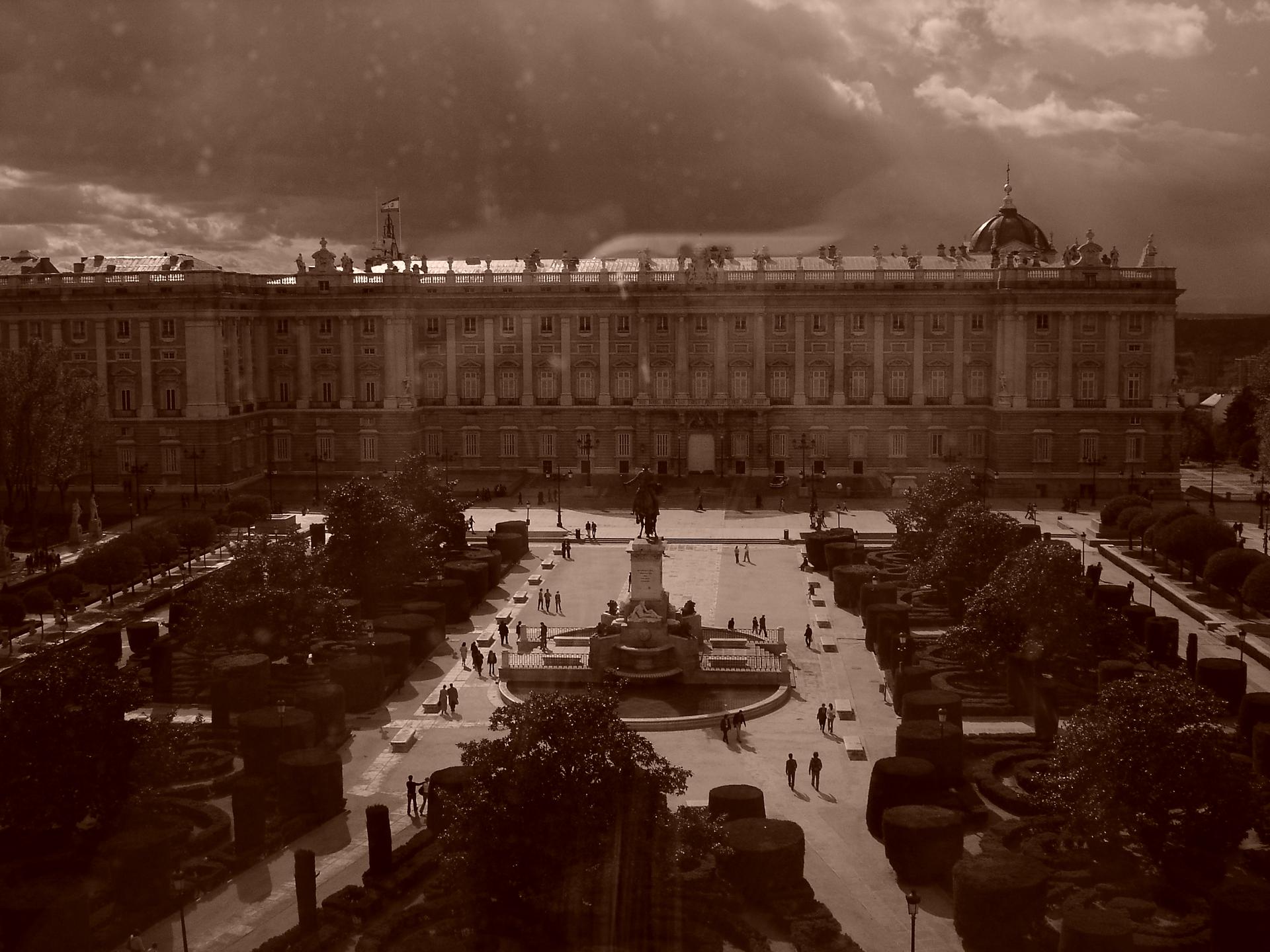
On the very same spot, had something built that could never burn like that again. Run your eye along the facade in front of you: from the base to the roofline there isn't a beam or a window frame carrying anything, because the palace is made entirely of stone and brick, with masonry vaults and no wood anywhere in its structure, which was a remarkably expensive choice in the eighteenth century. Construction ran from 1738 to 1755, and became the first king to actually move in, in 1764.
What came out of it is the largest royal palace in Western Europe, with more than three thousand rooms and a hundred and thirty-five thousand square metres, bigger than Versailles or Buckingham Palace. The current royal family doesn't live here. They stay in a much smaller house on the edge of the city, and this building is used for state visits and ceremonies.
The rest of the year you can go in with a ticket, up the staircase Carlos III had built, through the rooms where the court received its guests. Anyone staying outside has already seen on the facade what the whole building turns on.
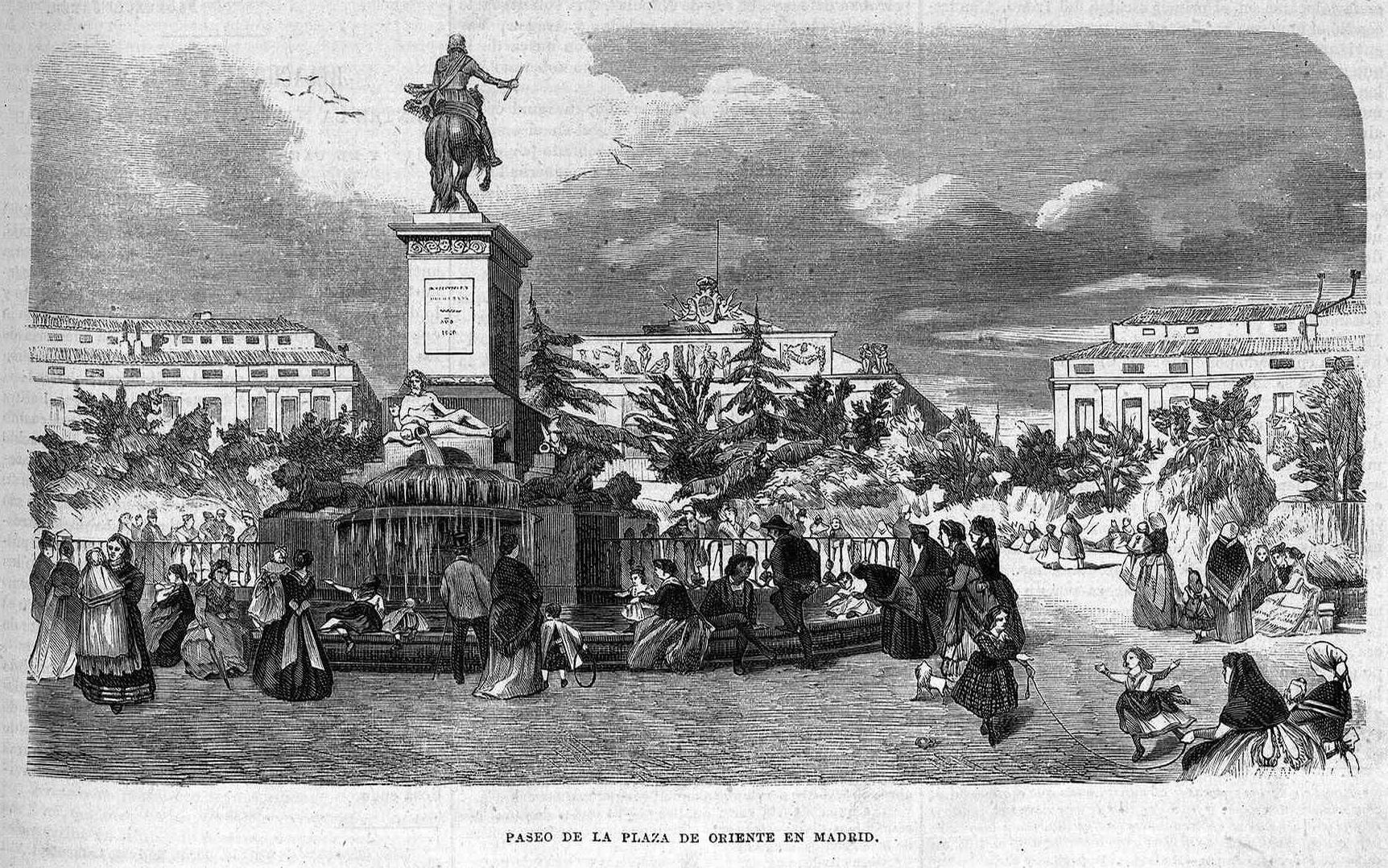
We keep to the north side of the palace and head for the semicircular square behind it, where a row of stone kings stands waiting for you.
Sources. Story: Patrimonio Nacional, Palacio Real de Madrid; Museo Nacional del Prado. Photos: Seventeenth-century view of the Real Alcázar de Madrid, public domain via Wikimedia Commons.