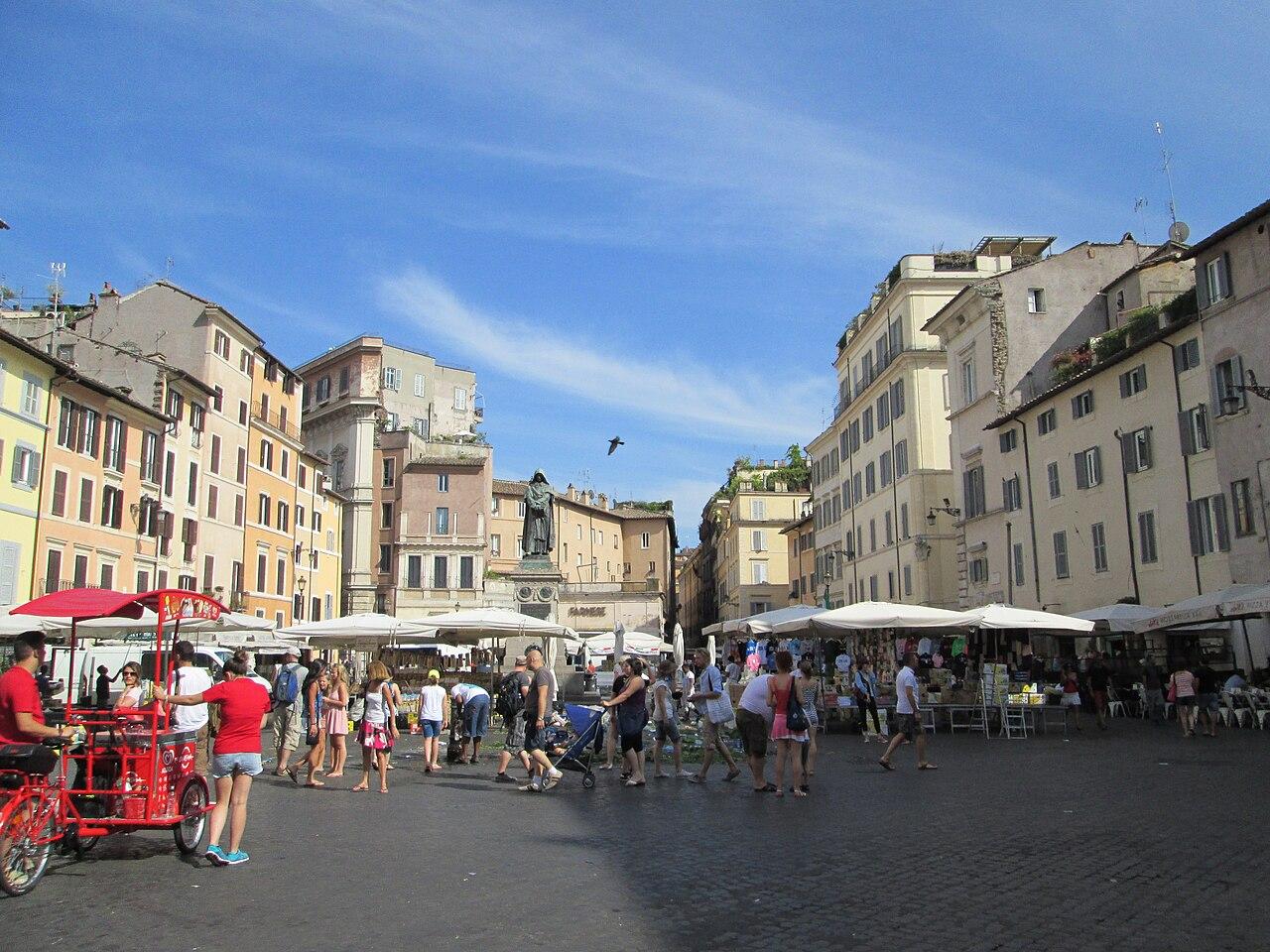
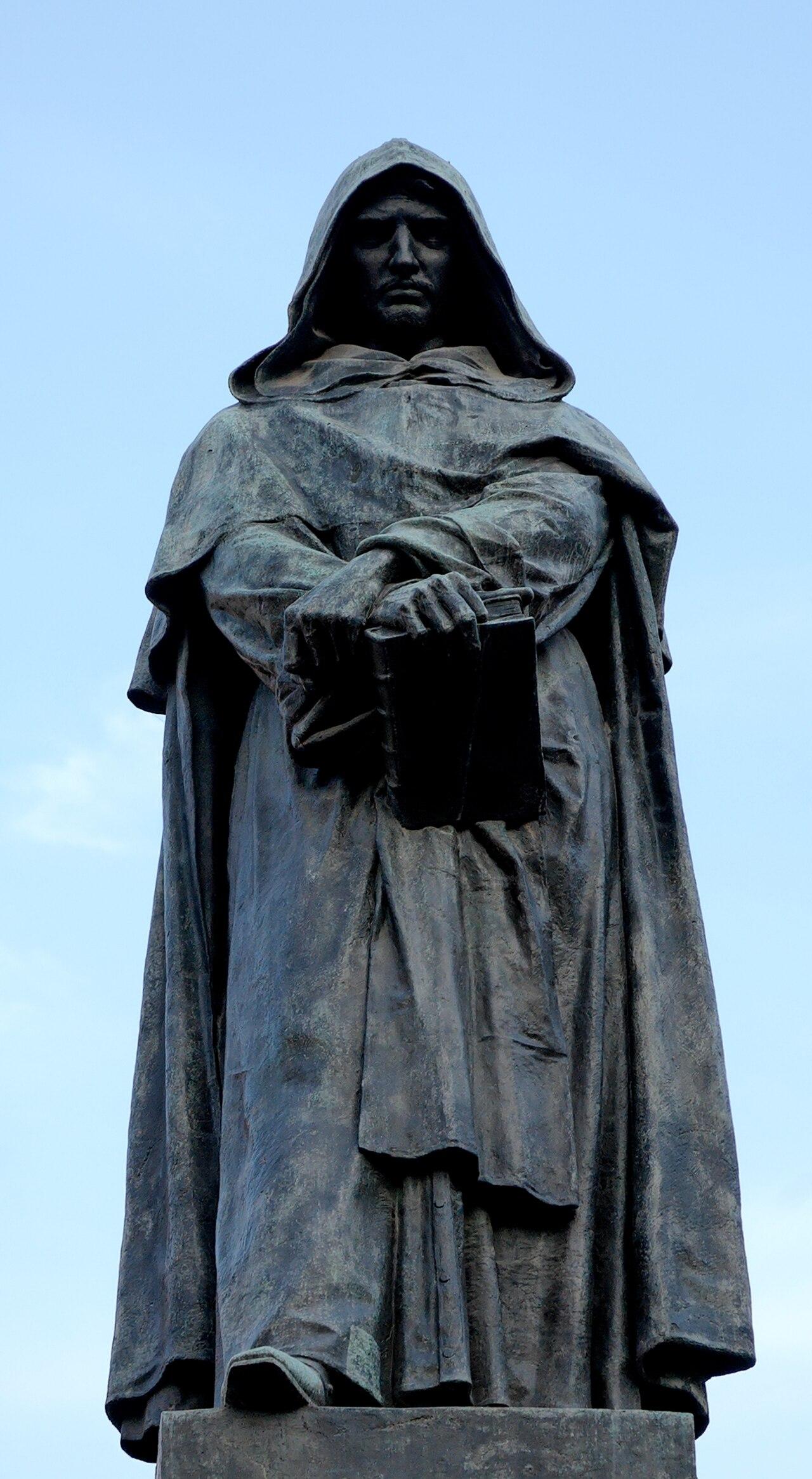
For centuries this market square was also the place where sentences were carried out, and the statue at its centre remembers the most famous of them all.
was a Dominican friar from Naples who travelled across Europe with ideas the Church simply couldn't accommodate: that the universe is infinite, that the stars are other suns with their own worlds around them, and that those worlds might be inhabited. After seven years in prison he was burned here on 17 February 1600, his tongue clamped so he couldn't address the crowd.
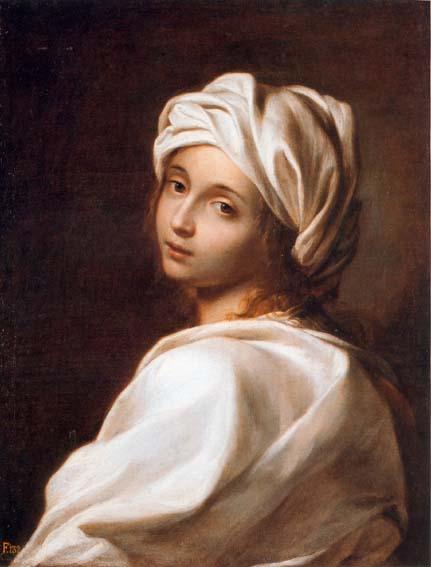
This happened less than half a year after the execution of , in the same city and under the same pope, .
The statue only arrived in 1889, raised by students and freethinkers against the wishes of the Vatican, and it looks deliberately towards St Peter's.
Around the square sat the city's printing houses, and it was here that the accounts of trials and executions were printed and sold. An execution was news, and the news sold well.
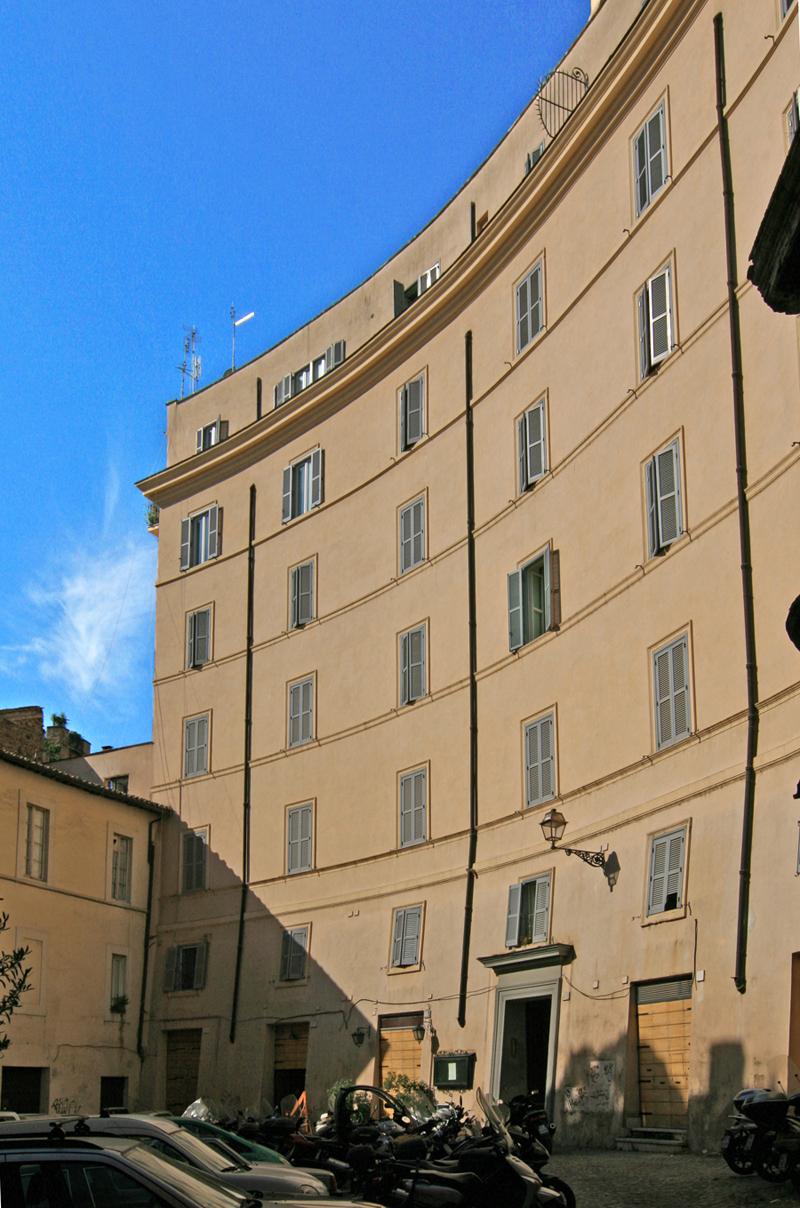
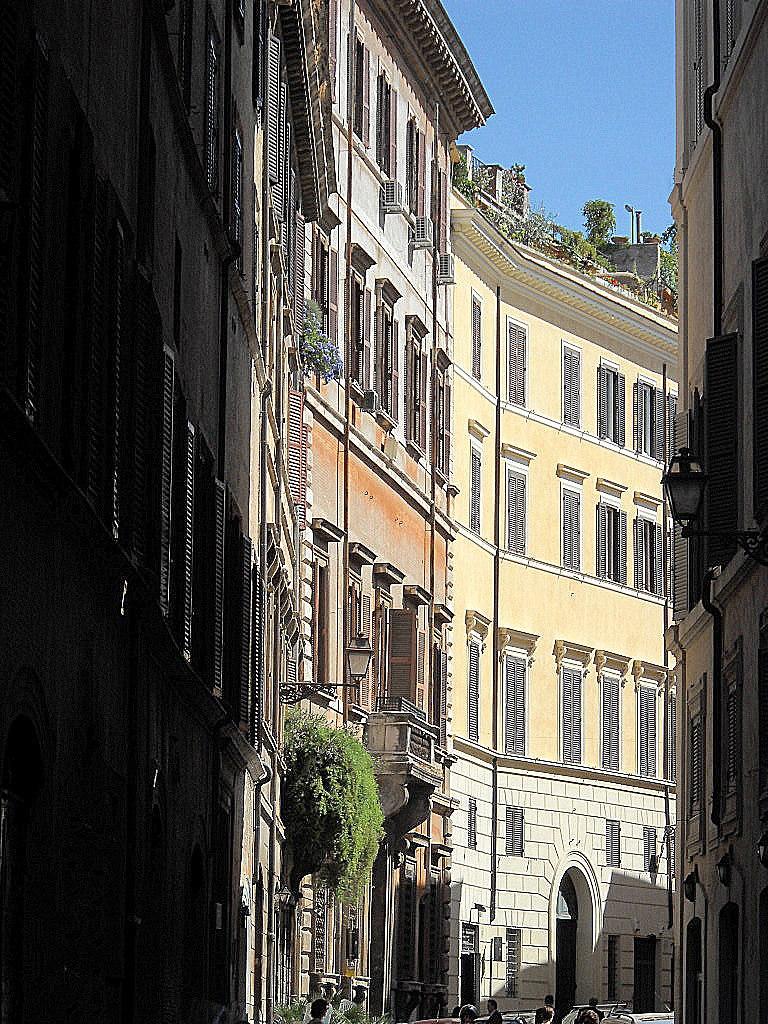
We take Via dei Baullari west, cross the wide street, and follow Via di Monserrato until we reach the building with the bricked-up windows.
Sources. Story: Sovrintendenza Capitolina ai Beni Culturali (Campo de' Fiori); Treccani (Giordano Bruno) Photos: Photo: Jastrow (Wikimedia Commons, public domain)